

When I went to school, I naively thought the idea was simply to memorize many facts for exam time. Little did I realize that an isolated fact is like a stray piece of a puzzle. It’s an object, an article, a fragment of information, a bit of trivia. Truth, on the other hand, is all about meaning. To put it another way, discerning truth is a matter of interpreting the facts.
Facts are obviously an important part of education and learning, but may lack meaning. Truth is more about the application of those facts. Our goal as parents is to have our children love learning and discover truth that will help them navigate life with purpose.
The fact is this: truth has been more impactful in my life than the facts I learned in school. Truth has guided me in a way that facts never could.

As a professional, I desire the people I work with to discover principles that can guide them in their careers. In most fields of work today, “continuing education” is required because we are not designed to stop learning. Facts can change but truth is constant and becomes the foundation for our lives.
Life can be very difficult at times when we examine the fact of a particular situation that is facing us. We need truth to guide us through these times. I was reminded this past week about how challenging it can be for a person to find direction in life; it can truly be a struggle. Here is some wisdom and advice that has helped me:
- Let your eyes look forward; fix your gaze straight ahead. Carefully consider the path for your feet, and all your ways will be established. (Advice from Proverbs 4:25-25 HCSB)
- God is capable of “making my footsteps firm” (Psalms 40:2) giving us a sense of security for the way forward.
- God is able to establish us (Psm. 37:23) and keep our feet from slipping (Psm. 66:9).
- When we find ourselves in a dark place, in the midst of despair, God can rescue us if we cry for help (Psm. 30: 2,3).
- Sometimes God doesn’t seem to hear us or speak to us and we “become like those who go down to the pit” (Psm. 28:1 NASB). We need communication with God or we can shift to a dark place (down to the pit). There is a sense of despair among this group because they see themselves “as good as dead and completely helpless” (Psm. 88:4 CEV). We are not actually without strength but are made to feel like we have no strength, then we begin to believe we have no strength.
- We need to pray: “Answer me quickly … or I will become like those who go down” into that dark place (Psm. 143:7 NASB).
- When it seems there is no one who can help us out of the pit (a dark place), we can still pray: “Don’t stay far off when I am in trouble with no one to help me” (Psm. 22:11 CEV).
- Remember, “he will deliver the needy who cry out, the afflicted who have no one to help” (Psm. 72:12 NIV).
When we isolate and focus only on the burdensome facts surrounding a situation in life it can lead us to a place of despair. The truth is we have a God who cares even when there seems to be nothing but darkness. The truth of God’s Word gives hope that light can shine in the midst of any darkness and deliver even when no one else can!
Have you ever or are you now in a dark place? Have you ever felt disconnected from God, like He is not hearing your prayers and you are not hearing his voice?



 1. There was a federal election in Canada,
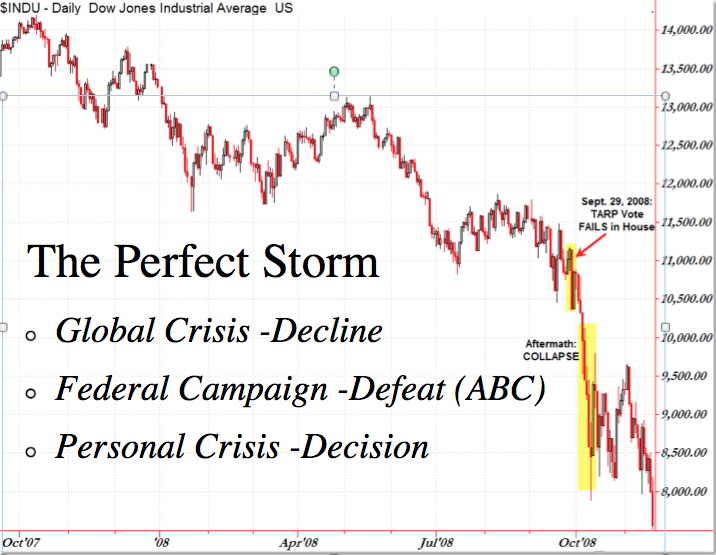 This led me to a very dark place, what my wife often refers to as my mid-life crisis. I struggled with the fact that I was not there for my clients when they needed me most; that was a fail. I put my name forward to run in a federal election and felt very much alone, especially after the devastating election night. I felt defeated (in more ways than just the election) and questioned my purpose. If you look at the chart and the shaded area of yellow, the stock market decline seemed to parallel my life at this time. What was my life all about anyway? It was one of my lowest, darkest times.
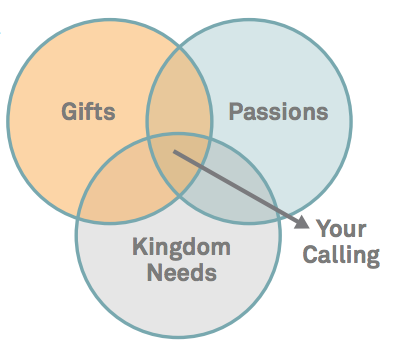 – I have discovered that you can actually fulfill your “calling” in a job or a career but the key is to fulfill your calling, no matter what your hand finds to do. I guess you can say, it’s finding that sweet spot and I think many times that simply means following the voice that is within.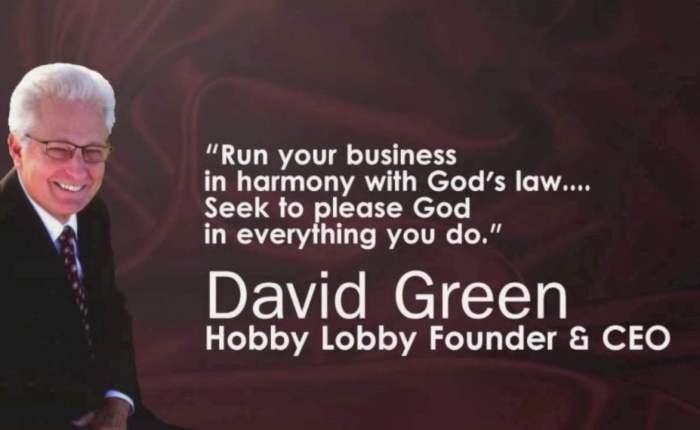
 General Ann Dunwoody was walking down the street when she saw a soldier in uniform walking with his hands in his pockets. Anyone who’s spent time in the military knows that this is a big no-no. Dunwoody could have literally walked by the mistake and not addressed it. It’s something small, it wasn’t impacting anyone at the time, and the kid probably just forgot. It wasn’t anything overtly heinous. As a general, though, she knew that if she didn’t correct the error, she would be, by the sin of omission, setting a new lower standard for that soldier. So rather than letting it slide, she approached him, kindly addressed the problem (rather than yelling at and demeaning the young guy), and reinforced the ideas of discipline and attention to detail.
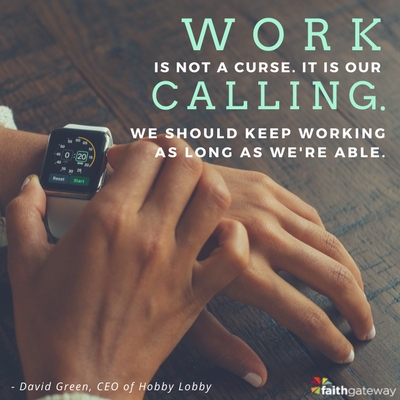 We usually make the same mistake when we categorize our work (or business) as secular, separating it from the sacred (calling). Rather than sensing the pleasure of God through our work, we often consider our work less than God’s calling. It seems that David Green felt like a black sheep because the rest of his family were “ministers” while he was in business. However, when we serve others (in our work), we are actually serving the Lord, not just men (Eph. 6:7) and can fulfill the call God has placed on our lives. Here is a great piece of advice: Whatever you do, do it enthusiastically, as something done for the Lord … (Col 3:23).
 The part that I found most interesting is the corporate structure of Hobby Lobby, where the shares are owned by a trust rather than by family members. This speaks to the fact that the Green’s are stewards of the company and the corporation is actually held in trust. This means if the company was to be sold, 90% of the value would go to a foundation and subsequently distributed to the Lord’s work. Typically, a business is passed down to the next generation, then the next, but in the case of Hobby Lobby, the family cannot actually touch the assets. Since these assets are seen as under God’s ownership, the corporate structure reflects that and is actually referred to as a “stewardship trust.”
 Sometimes, language or dialect can be a barrier to understanding. I recall when we had friends from Ontario visit us in Newfoundland and we had a conversation with some locals. Our friends heard us speaking, but did not understand. Maybe I shouldn’t be shocked because the very tone of the common phrase, “Yes b’y,” actually changes its meaning.
 Politicians typically only say what they want us to hear and we have to dig deeper if we desire to get the entire meaning; otherwise our perspective remains limited. For example, the Trudeau government often claims it has cut taxes for middle-class Canadian families. A recent article helped me understand that
  If you think about it, the perspective from which you see things can be the very obstacle that prevents you from seeing another point of view. (Doesn’t this graphic resemble a political debate? It totally depends on which side you are on).
 In a conversation, an accountant told me he keeps his antennas raised when in discussion with clients. Since mankind is spiritual, our spirits are meant to be active and sensitive, which leads to an understanding of others.
  Warren Buffett brings clarity to the purpose of money by stating, “making money is a by-product of our guiding purpose.” When you think about your calling and purpose and see money as a tool to complete it, maybe “the making of money” takes on a whole new meaning.
 My perspective was that my work as a financial advisor was not necessarily a “calling” but just a job (secular), while my “calling” as pastor was my true work (sacred). Can you sense the inner turmoil I was feeling? Had I missed my “calling” or was it possible that I could actually live it out by being a financial advisor? Did I have the wrong perspective to start with? Should I have even separated the two – the sacred and the secular?
 So whether I do the work of a pastor, financial advisor, director, bus driver, or teacher, you get the picture, the important thing is to be a good steward and be true to that call.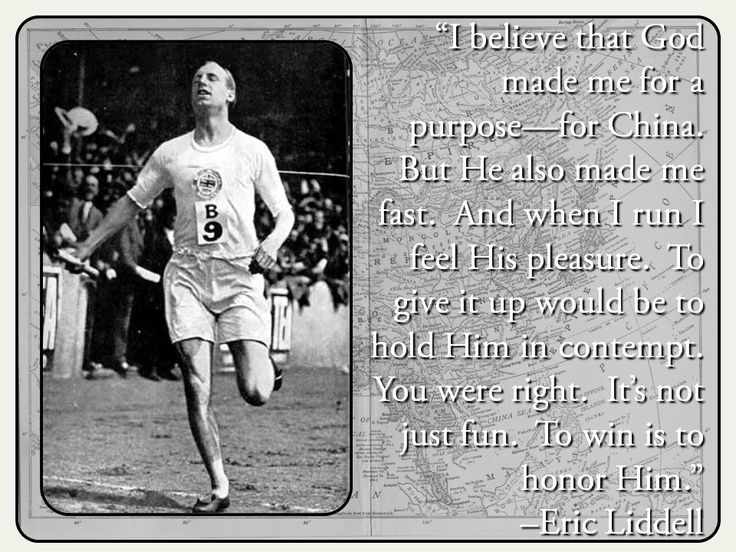


 Lorne Robinson's Blog