

I have been very intrigued by the content in this month’s Kingdom Advisor’s study group centring around legacy and the importance of having an impact beyond my lifetime. Everyone was challenged with the difference between estate planning and legacy planning. In particular, legacy planning not only represents a change in terminology, but it changes the lens through which we see things. Specifically, estate planning has a one-generational focus (transferring wealth to your heirs) while legacy planning looks to impact 5-7 generations (transferring values to multiple generations). That requires a bigger vision and a broader perspective than advisors or clients typically focus on.
Financial professionals are uniquely positioned to invest in the lives of clients. I know as an advisor my discussions focused more on Estate/Wealth Planning rather than Legacy Planning, so this study stretched me to expand my thinking.

My parents are presently visiting with us and this past weekend our son and grandson visited, so we had four generations in our home. My Dad shared stories with us about how his faith and relationship with God were developed as a young minister and also the impact his own father had upon that faith. Most of these stories I had heard before but my son and daughter-in-law listened intently while baby Ernest slept through it all. I thought how important this time was and wondered if generations yet unborn would benefit from hearing the same stories. To see how God was active in the lives of my parents and grandparents helps to inspire my faith so I am sure it can impact others.
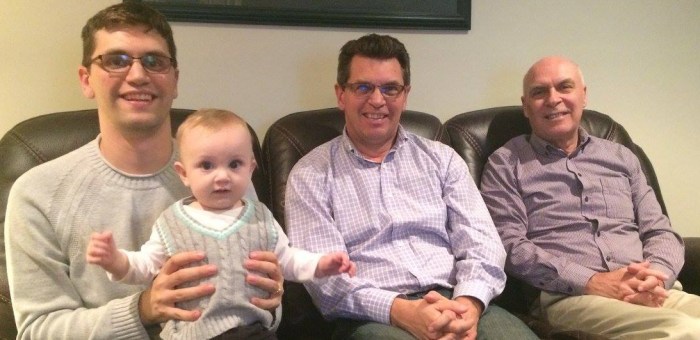 Think about the business of family for a moment – isn’t it truly about legacy planning?
I will teach you hidden lessons from our past–stories we have heard and known, stories our ancestors handed down to us. We will not hide these truths from our children; we will tell the next generation about the glorious deeds of the LORD, about his power and his mighty wonders. For he issued his laws to Jacob; he gave his instructions to Israel. He commanded our ancestors to teach them to their children, so the next generation might know them–even the children not yet born–and they in turn will teach their own children. Psalm 78:2-6
These verses instruct families specifically to focus on legacy planning which is clearly beyond one generation. I encouraged my Dad to write these things down so the events of his life could be passed on to the children not yet born. That way, his life reaches beyond his years lived on this earth. Many people may feel estate planning is just for those who have wealth, but legacy planning is for everyone.
Ron Blue provides some excellent advice in his book “Splitting Heirs,” when he describes the “Wisdom Principle” which is to “transfer wisdom before wealth. Wealth never creates wisdom. Wisdom may create wealth.” If you think about it “wealth” is the focus of estate planning, while “wisdom” is the focus of legacy planning.
We need to think deeper about the time we are each given. We all have 24 hours per day, and 168 hours per week. On the topic of stewardship Ken Boa says,
“What differentiates people isn’t the amount of time available to them, but the manner in which they exercise their gifts and talents within the available time. We can waste time; we can spend time; or we can invest our time wisely. That’s what stewardship is about: faithfully developing and using our gifts, talents and resources within the amount of time God has allotted to us.”
We have time in an equal measure, but we must be intentional about how we spend it or invest it. The fact is that we often just spend our time when we should be investing it. Talents are not in equal measure to everyone. We are unique and each has different gifts. Our focus tends to be more about using these gifts to grow wealth and much less about the growth of our heirs.
Thinking beyond our life can be very challenging because it stretches us outside of our normal pattern of thought. Maybe our perspective needs an adjustment so we consider more the impact we can have upon “the children not yet born.” That takes intentionality and a shift of focus. Our efforts must move toward transferring our values and wisdom as a guide to govern future generations and less effort on accumulating and transferring wealth. It seems if we get the legacy planning right, the estate planning will be so much easier.
The accumulation and eventual transfer of wealth is a major part of financial planning. If we fail to give proper attention to the legacy planning, we have truly missed the reason that we were entrusted with the wealth in the first place.
Are we spending our time creating something that will only benefit one generation? Can we be more intentional in our investment of time and leave a legacy that extends 5-7 generations?

 Sometimes, language or dialect can be a barrier to understanding. I recall when we had friends from Ontario visit us in Newfoundland and we had a conversation with some locals. Our friends heard us speaking, but did not understand. Maybe I shouldn’t be shocked because the very tone of the common phrase, “Yes b’y,” actually changes its meaning.
 Politicians typically only say what they want us to hear and we have to dig deeper if we desire to get the entire meaning; otherwise our perspective remains limited. For example, the Trudeau government often claims it has cut taxes for middle-class Canadian families. A recent article helped me understand that
  If you think about it, the perspective from which you see things can be the very obstacle that prevents you from seeing another point of view. (Doesn’t this graphic resemble a political debate? It totally depends on which side you are on).
 In a conversation, an accountant told me he keeps his antennas raised when in discussion with clients. Since mankind is spiritual, our spirits are meant to be active and sensitive, which leads to an understanding of others.
 He goes on to cite the reasons for the non-response from God, which could be denominational, or we are not praying enough, or the wrong people are praying, or praying wrongly (kneeling or not, with eyes open or eyes closed).
 Dr. Emoto and his team observed that after the experiment very beautiful crystals had formed in some of the frozen water samples where the positive vibrational waves were directed. Dr. Emoto then exposed water samples to music from Mozart, Beethoven, and other classical composers and found that beautiful crystal shapes formed in these samples as well.
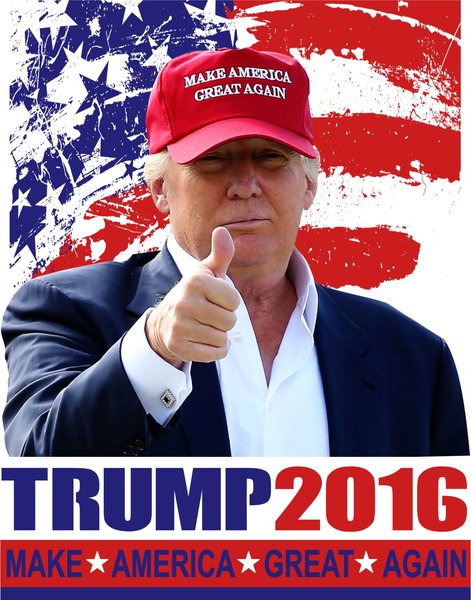 Think about politics for a moment. Just look back one year when the United States was in the midst of an election campaign. Let’s be honest, when you first heard that Donald Trump was running for President, how many thought he would actually become President? Most didn’t believe he had a shot at becoming the candidate to represent the Republicans in the run up to the election, let alone be in the presidential race. For many, the unthinkable happened … Breaking News: Donald Trump is now the President.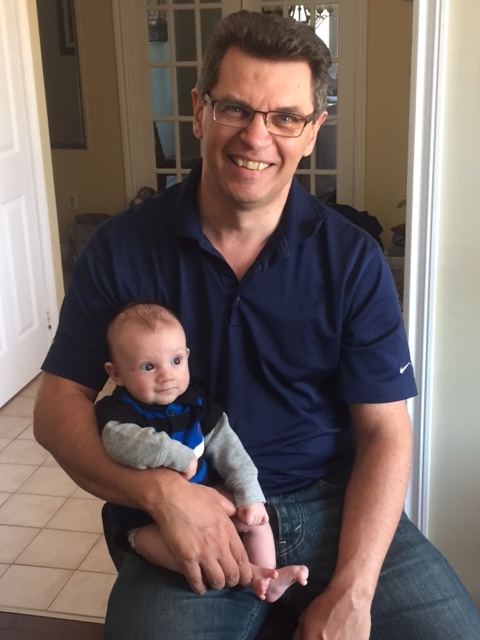


 Lorne Robinson's Blog