Living in the Tension

Living in the Tension

Today, I’m truly reminded of the brevity of life. On September 10, 2022, my best friend, Brad, was killed in a motorcycle collision (with a moose). As I read today how Jesus challenged us to consider the lilies, the grass of the field and the birds of the air, I began to see what I had never previously seen from the many times I have read or referenced these words.

“Look at the lilies and how they grow. They don’t work or make their clothing, yet Solomon in all his glory was not dressed as beautifully as they are. And if God cares so wonderfully for flowers that are here today and thrown into the fire tomorrow, he will certainly care for you. Why do you have so little faith?”

Luke 12:27-28 NLT

“Look at the birds of the air; they do not sow or reap or store away in barns, and yet your heavenly Father feeds them. Are you not much more valuable than they?”

Matthew 6:26 NIV

When Jesus refers to lilies and birds in Luke 12/Matt. 6, I have always felt reassured and comforted but today, I felt unsettled. My concentration in these verses has always been on the comforting truth that we need not worry because God values and cares for us even more than the birds or the lilies. However, as I pondered the next phrase about the flowers that are “here today and thrown into the fire tomorrow,” I realized its solemn truth about the brevity of life.

Continue this same truth about birds for a moment. Earlier this year, we were with our grandchildren in downtown Ottawa. Walking past a large glass building, we couldn’t help but notice several dead birds on the concrete walkway. Their lives had been cut short by having flown into the glass windows.

While reading today through a study called “Wisdom Over Wealth,” this statement was most sobering to me: “Jesus isn’t saying the birds are protected from all harm.” The fact is we pray for the Lord’s protection over our lives and Jesus clearly instructed us, “Do not worry about your life” (Matt. 6:25). We are not to live in fear but we are to live in this paradox.

We visited with Melinda this summer (Brad’s widow) and chatted about how often people speak of the Lord’s protection. I truly struggle in the conundrum of why God allowed Brad’s life on earth to end at such a young age. He was having such an impact for God’s kingdom. Jesus does provide a response as we live in this tension, even though it may not be the one we wish to hear:

“But not a single sparrow can fall to the ground without your Father knowing it.

Matthew 10:29 NLT

The fact is we often face death or illness or circumstances in life that we simply cannot understand. Jesus, by His words, is inviting us into this tension: enjoying God’s provision while accepting life’s brevity.

Jesus was confirming that we are like the birds and the flowers – we are made of the same stuff, the dust of the earth. Please don’t miss the fulness of what Jesus was saying. We can be people who can trust the Lord for and live in His provision; but we are also called to trust Him when the sparrow falls to the ground – He knows and He sees.

The year 2022 was “Come Home Year” in Newfoundland – we bought a mug with that title as a souvenir. That mug is now a solemn reminder of Brad and the year he went Home.

I love this quote from the Faith & Finance Study: “We can live more freely once we get more comfortable with the inevitability and unpredictability of our own death.”

An Eye Exam

An Eye Exam

I recently had an eye exam and there was no significant change in my prescription. This reminded me of the words of Jesus in the famous Sermon on the Mount. I googled the verse of interest and immediately received this AI generated overview:

The Bible verse “If your eyes are healthy, your whole body will be full of light,” is found in Matthew 6:22. It essentially means that if your mind and heart are focused on good things, your whole life will be filled with light and positivity. If your “eye” (representing your inner self) is not focused on God, the truth, and good things, your whole life will be filled with darkness. 

Is Your Eye Healthy?

That certainly seems to be a reasonable explanation, but is that really the extent of what Jesus was saying here? To fully understand, might I suggest we need more SI (Spiritual Insight), since AI (Artificial Intelligence) has its limits. Maybe a quick look at the context of this verse might give us a clue.

Matt. 6:20 talks about treasure and the places it can be stored (heaven or earth). The next verse connects our heart with where we place our treasure. Inserted here are two verses about having a healthy or clear eye vs. an evil or unhealthy eye which results in darkness. This is followed by the reference to two masters and the inability to serve both with the simple conclusion: “You cannot serve God and money.” Then, the instruction to not worry about the things needed in life, like food and drink and clothes – some of the things we purchase with money.

With this context in mind, why does Jesus speak about the eye being good or evil, bringing light or darkness? Could the health of the eye be a reference to our attitude about our financial resources?

Is Your Eye Envious?

This is not the only time Jesus referenced the eye. In Matthew 20, He spoke about “the kingdom of heaven” being like a landowner who hired workers for his vineyard. These individuals were hired at different times during the day – some early morning, others at 9 am, others at noon, then others at 3 pm and more at 5 pm. At the end of the workday, the workers were called to receive their pay, “beginning with the last ones hired and going on to the first” (v. 8). Naturally, the people who worked the entire day expected to be paid more than those who started work at 3 or 5 pm and this led to complaints.

The story concludes with a few questions:

“Is it not lawful for me to do what I wish with what is my own? Or is your eye envious because I am generous?”

In this story, Jesus was illustrating that the darkness on the inside of these workers was due to a desire for more (an amount above the original agreed amount). All day these workers knew what they were going to be paid but this focus shifted when they saw that others who worked less were being paid the same (meaning their hourly wage was less than those hired later). There was an immediate discontentment when they compared themselves with people who were hired 8 hours later. Comparison is the enemy of contentment.

Let’s assume you or I were hired at the start of the day – would we be any different? If we worked 10 -12 in the day and others worked only two hours, it would be natural to expect more pay, wouldn’t it?

Is Your Eye Clear?

The point Jesus is making here is that the eye is not clear and greed enters the heart through our eyes. How would you define greed? Maybe it’s as simple as the desire for more. AI says it is characterized by a strong, often selfish, yearning for more than what is needed or deserved. Greed is often associated with materialism, envy, and a focus on self-interest. 

Here’s how Tim Keller spoke about the eye and greed:

Greed is different than other sins. This is why Jesus says this is an eye sin. This darkens your eye spiritually. Jesus did not say to anybody, “Watch out, you might be committing adultery.” If you’re committing adultery; you know you’re committing adultery. You don’t say, “Oh, you’re not my wife!” It doesn’t happen. But Jesus has to say, Watch out, you might be greedy. Greed hides itself. It blinds you in a way that adultery doesn’t. Over the years as a pastor, I’ve had people come in to talk to me about sins, but I don’t remember anybody coming to me to confess the sin of greed.

https://www.plough.com/en/topics/faith/discipleship/watch-out-you-might-be-greedy

It’s such a challenge to recognize this darkness or even know it has found a place in our hearts. In fact, “The heart is deceitful above all things and beyond cure. Who can understand it?” (Jer. 17:9)

Jesus said that “from within, out of the heart proceed …” a long list which includes coveting and envy (Mark 7:21, 22). The word envy is literally “an evil eye.”

Tim Keller explained how easy it is for us to not even consider the possibility that we might be materialistic with this realistic example:

Materialism has the power to get you to choose a job, not one that you love, not one that you’re good at, not one that helps people, but one that makes you money. You do it because it will get you to a certain status in life. You choose the job on the basis of that. For five to ten years the adrenaline can keep you going, but after a while you find yourself empty inside. Why did you choose the job? Your eye was dark.

https://www.plough.com/en/topics/faith/discipleship/watch-out-you-might-be-greedy

Is Your Eye Focused?

When your eye is dark it is easier to refuse to help someone who has a genuine need (Deut. 15:9) than to truly have compassion and help them. Our response to others is determined by what is in our heart and Jesus is saying the entrance into the heart is through the eye. The instruction in the verse that follows is pretty clear:

Give generously to the poor, not grudgingly, for the LORD your God will bless you in everything you do.

Deut. 15:10 NLT

So what did Jesus mean when he spoke about a clear eye? It wasn’t just focusing on good things (as AI suggests), so your life will be filled with positive things. It was about having the right perspective – shifting your focus away from greed and discontentment which is the darkness. Instead, the light brings generosity and contentment into view. A clear eye means we view the resources we have differently, we begin to ask why we have these resources.

The “evil eye” focuses on getting more while the “good eye” focuses on giving more.

Let me wrap this up with Proverbs 22:9:

“He who is generous will be blessed, For he gives from his food to the poor.”

The newer translations just use the word generous here, but that word refers to one who “has a good eye” – the KJV translates it as one with a bountiful eye.

Consider this in light of what Jesus said:

“When your eye is healthy, your whole body is filled with light.”

The healthy or “bountiful eye” speaks of generosity that flows from an abundance mindset and is not restricted at all by scarcity thinking.

Do You Need Corrective Lenses?

In a 2012 study published in Science, behavioural economists Mullainathan and Shafir discovered something remarkable:

When we perceive scarcity (even if it doesn’t match reality), our brain undergoes a measurable shift. Our mental bandwidth narrows, focusing intensely on what we might lose while becoming blind to potential gains.

https://breakingbank.media/ca/breaking-the-scarcity-cycle-a-guide-for-smarter-wealth-management/?ref=sadeyemi&utm_source=email&utm_medium=email+marketing

This confirms what the Sermon on the Mount stated more than 2000 years earlier:

But when your eye is unhealthy (perceiving scarcity), your whole body is filled with darkness (your mental bandwidth narrows). And if the light you think you have is actually darkness, how deep that darkness is!

A scarcity mindset negatively limits our ability to be generous, which is a dark place. Lord, open our eyes to Your light and deliver us from the dark. For my physical eyes, I need corrective lenses and I use them every day. Do we not need the same discipline to wear our spiritual lenses daily? How else can we have “a bountiful eye?”


Where Are You?

Have you ever asked a question even though you knew the answer? This is a common technique used when engaging with children or grandchildren. It’s a great way to help them think about a situation they find themselves in and how they ended up there.

Similarly, sometimes we ask the question “Where are you?” even though the answer seems obvious.

In life, we all have moments where we wish we could make a different decision. Maybe you’ve been there too.

When God asked Adam and Eve, “Where are you?” it wasn’t about their physical location but rather their proximity to Him! It wasn’t about making them feel guilty for their mistakes, or even how their choices was a failure to trust Him when tempted.

It’s easy to get stuck dwelling on our past mistakes and the resulting consequences. But what’s the point of that? The mistake is behind us, and we can’t change it. Instead, we should focus on where we are now and where we want to go. After all, mistakes are just detours on the journey to our true purpose. Let’s not allow them define us or hold us back.

I am reading through the Bible this year and just finished the story of Joseph. If anyone in life was shifted off course, it was Joseph. Having a dream (at age 17), being sold by his brothers, then elevated to a position of authority only to be falsely accused of sexual misconduct, thrown in jail and eventually becoming the second in command in all of Egypt (when he was 30). Where was Joseph? That’s 13 years of utter turmoil when Joseph went from a pit to prison, yet had success even in the darkest times.

Where are you? This simple question has a deeper meaning than just location. It’s an invitation to reflect on where you are in life and where you are meant to be. Taking time to reflect on your relationship with God and your life’s purpose can lead to powerful transformations. Don’t underestimate the power of this question and the impact it can have on your life.

Can you just imagine the scene where Joseph’s brothers meet him 15 years later after causing so much pain and disruption in his life? He is now in a position of authority above all of them. This turn of events likely left them in shock and fear.

What amazes me is “where” Joseph was … not in his position, but in his perspective. Joseph explains to his brothers that yes, “you sold me here” but more significant is the fact that “God sent me before you to preserve life” (Gen. 45:5). Joseph recognized that every difficult situation he faced had a greater purpose than he realized at the time. His story reminds us that our perspective can be more significant than our position.

So, where are you right now? Instead of just naming a place or position, we should consider our proximity to God and the work that He has prepared for us to do. Let’s focus on our perspective and trust that every step we take, even in difficult times, is leading us towards a greater purpose.

As it is in Heaven

As it is in Heaven

As I awoke this morning, my thoughts went to the line in the Lord’s Prayer where it speaks about “His will be done on earth just as it is in heaven” (my paraphrase). I guess that summarizes a deep inner desire within each of us: to live out what God’s will is today, just as God already planned it in heaven.

I believe a person would have a greater level of fulfillment if they believed their activity and work somehow had its origin in a divine purpose for their lives. In essence, knowing God’s will for us (in heaven), and then living it out.

The problem: heaven is not typically our focus. We haven’t been there, so how can we know or connect the plans in heaven with what happens on earth? To be clear, from the very time of creation, earth is separate from heaven. When we fly, we get a little sense of be separated from the earth; It’s like we are shifted into a different realm.

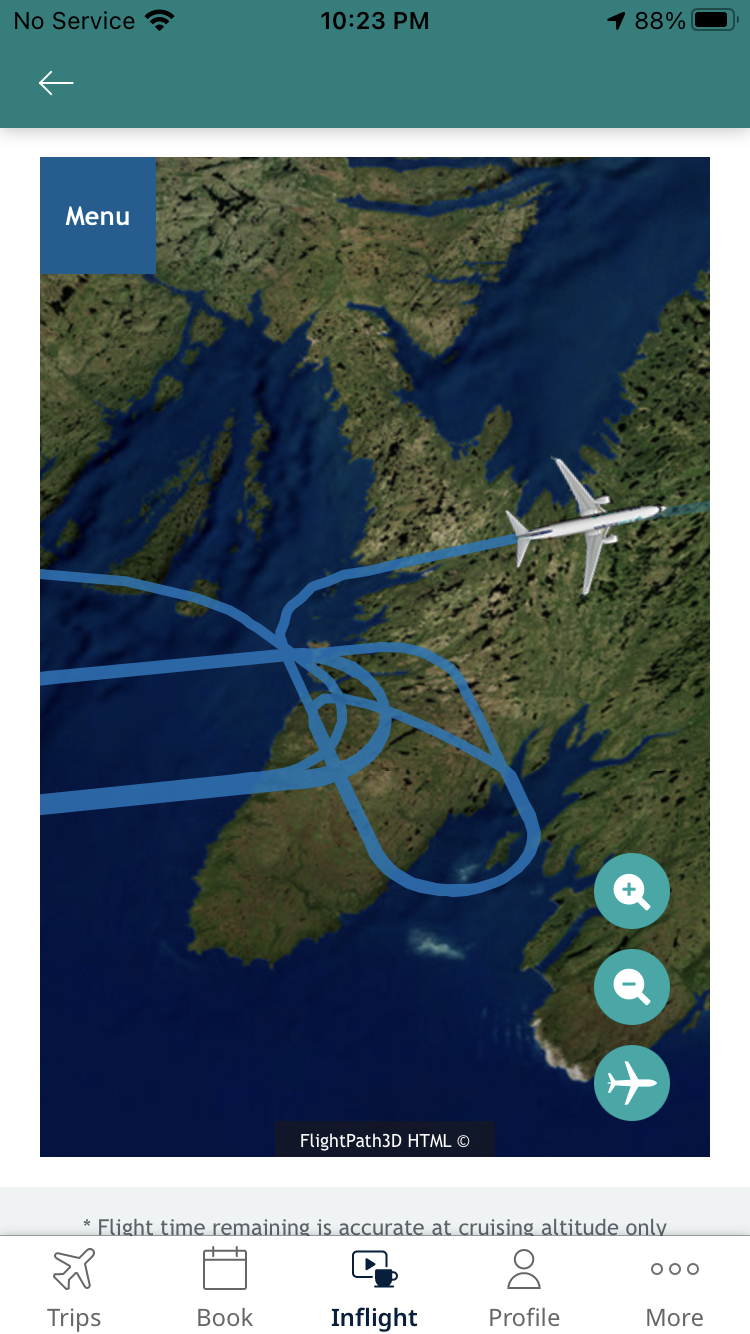
Screenshot of flight path

In August 2021, we flew to St. John’s, Newfoundland. As we approached our destination, the pilot announced that we were unable to land because the runway lights were not working due to a power outage. We didn’t think much of it, but looked at the airplane app and took a few screenshots of the plane circling. Then after about an hour, we began to descend below the clouds into the darkness and rain.

We discovered that the storm had caused a power outage. Until we landed, we had no idea there was even a storm because we were circling above it.

Maybe the Lord’s prayer is telling us that even in the midst of the storms (on earth), we can live out God’s purpose because our perspective is based on being above the storm (in heaven). Maybe that’s why Paul instructed us to set our mind on the things that are above!

Here’s where many people unfortunately find themselves:

“Yet when I surveyed all that my hands had done and what I had toiled to achieve, everything was meaningless, a chasing after the wind; nothing was gained under the sun.”

Ecclesiastes 2:11

Saying that everything is meaningless brings you down (pun intentional), but we must understand Solomon’s point of view.

“I have seen all the things that are done under the sun; all of them are meaningless, a chasing after the wind.”

Ecclesiastes 1:14

The key phrase is under the sun, which is repeated throughout the book. Solomon is sharing an earth-bound perspective. He is only considering life “under the sun”; that is, a human life lived to the exclusion of any consideration of God. From that godless perspective, everything is indeed “meaningless.”

https://www.gotquestions.org/everything-is-meaningless.html

Here’s a prayer that was written by Ken Boa:

Dear Lord, where would I be without Your Word? What would guide me and teach me the answers to the fundamental questions of origin, purpose, and destiny? Human speculation is utterly inadequate for this task, because the answers to these and other questions require a word from without, a revelation that is not under the sun but from above the sun. Teach me to treasure Your Word, and give me the wisdom to read, meditate on, and memorize Your revealed truths—this is the sure foundation upon which to live and flourish. May I be different from the corrupt culture in which I live and value the things that have eternal rather than passing worth. Then I will order my steps with wisdom, prudence, discernment, and good counsel. I want Your Word to make a difference in my life and to be evident to all.

Ken Boa, Reflections Ministries

Is Your Olympics Over?

Is Your Olympics Over?

It’s been quite interesting to watch some of the Olympics this summer and now the paralympics begin. The display of talent in the closing ceremonies and the endurance and strength in the athletes is something that comes through discipline and training. What human beings are able to accomplish is astounding.

Thank you for making me so wonderfully complex! Your workmanship is marvelous—how well I know it.

Psalm 139:14 NLT

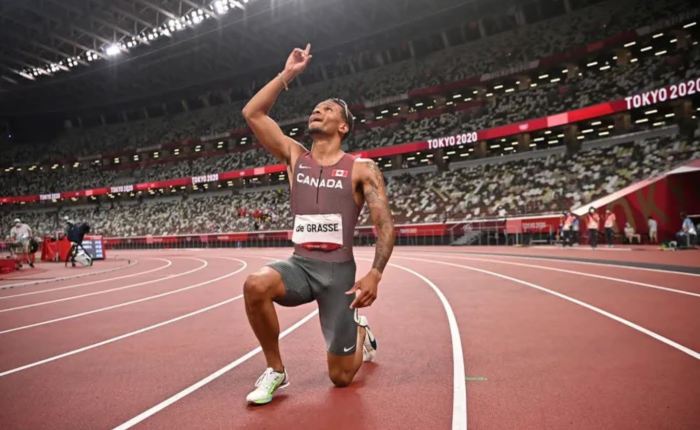
I am certain that not every athlete may consider a higher power when they are competing. I do find it interesting to see a photo of Canadian Andre De Grass after winning the gold in the men’s 200m; he is on one knee, looking and pointing up. It reminded me of a blog I wrote about olympic medalist, Eric Liddell.

Eric Liddell was a devout Christian and missionary to China, who felt it a priority to run in the Olympic games. His sister felt that his training for the 1924 Olympics deterred him from returning to China. He said, “I believe God made me for a purpose, but he also made me fast! And when I run I feel His pleasure.” We usually would not class running or involvement in a sporting activity as spiritual, or God-honouring, but more a physical activity. For Liddell, running wasn’t just a fun activity but a God-honouring one.

Word4Now Blog – June 2017

The Bible describes our bodies as temples and indicates that there is a greater purpose in everything we do, maybe even greater than we realize.

You are not your own, for you were bought with a price. So glorify God in your body.

Paul, 1 Cor. 6:20 ESV

Whatever you do, do it enthusiastically, as something done for the Lord, and not for men.

Paul, Col. 3:23 HCSB

The Apostle Paul made many references to sport like “running in a race” with the goal to “get the prize” and also referenced boxing and wrestling in his writings. This got me to wondering if he might have attended the Olympics. In my search I found this article titled: The Historical Background of Paul’s Athletic Allusions by Jerry M Hullinger which states:

The chief athletic contest in Greece was the Olympic games. Founded in 776 B.C., these games were held every four years.

Many other athletic contests were spawned from the Olympics and there was one held in Corinth. The Isthmian Games form the backdrop for 1 Corinthians 9:24-27.

Paul probably was in Corinth when the games of A.D. 49 or 51 were held. A further reason that lends weight to the idea that Paul attended these games is his profession as a tentmaker. At such occasions, large numbers of tents would be needed to provide shelter for the crowds of visitors …

Even if Paul were not, technically speaking, a tentmaker but rather a leatherworker, this would not have precluded his making or repairing tents or shelters.

It’s quite fascinating to think that Paul’s writings were influenced by these competitions because he was likely an eyewitness to many of these events.

24Don’t you realize that in a race everyone runs, but only one person gets the prize? So run to win! 25All athletes are disciplined in their training. They do it to win a prize that will fade away, but we do it for an eternal prize. 26So I run with purpose in every step. I am not just shadowboxing. 27I discipline my body like an athlete, training it to do what it should. Otherwise, I fear that after preaching to others I myself might be disqualified.

Paul, 1 Cor. 9:24-27 NLT

Some lessons Paul shared from these games:

  • Bring glory to God by using one’s strength and talent, not only in sport, but also in life’s work.
  • Apply the same sort of discipline and training in life as those in sport in order to obtain a crown (earned in the ancient games) or a medal in our modern day Olympics
  • To know your purpose you need to look up (beyond the sun).

Sometimes it’s easy to think that what we do on this earth lacks meaning and purpose and finding fulfilment can be exasperating. There is even a book in the Bible dedicated to “the Futility of All Endeavour” (Ecclesiates).

I have seen all the things that are done under the sun; all of them are meaningless, a chasing after the wind.

Solomon, Eccl. 1:14 NIV

It is natural to only look “under the sun” to discover our purpose. I recently read that the way to discover meaning is to look beyond the sun, into the heavenliness. That’s why Paul encouraged us “to work for the Lord” (rather than men) and this is to “win a prize that will not fade away.” Through the games, Paul was reminding us that our focus can so easily be on the wrong prize.

Paul stated in 1 Corinthians 9:25 that the reason he exerted him­self in his ministry was so that he would obtain an incorruptible crown (στέφανος; cf. 2 Tim. 2:5; 4:8).

Jerry M Hullinger, The Historical Background of Paul’s Athletic Allusions.

Paul’s references to the believer’s prize seem to be related to conflict in the spiritual life, a prize that can be won only if one throws himself and his resources entirely into the struggle.

Ethelbert Stauffer, “βραβεύω? in Theological Dictionary of the New Testament
vol. 1 (1964), 638; and Smith, “Games,” 2:1173.

What a powerful statement: the prize can only be won by a complete investment of oneself and the resources that have been entrusted to our care. Are we putting all our energy and resources into what we have been called to do? Are we looking beyond the sun daily in order to walk in the work that God has prepared (in advance) for us to do (see Eph 2:10)?

Possessing this crown signified spiritual, emotional, financial, and social benefits. Yet as Paul wrote, as grand as this earthly attainment was, it paled in significance when compared to the heavenly reward for the faithful believer (1 Cor. 9:25).

Jerry M Hullinger, The Historical Background of Paul’s Athletic Allusions.

Any recognition or reward for our efforts and accomplishments in the industry that we work in or sport in which we compete, will pale in comparison to the reward we can look forward to. This happens when we invest our lives with a perspective that’s beyond this world.

Just as a side note: My son, David completed some research and did a project using Legos to explore the history of the Olympics in a 7 minute video for one of his classes in university. Thought you might find it interesting.

Without a (Financial) Vision …

Without a (Financial) Vision …

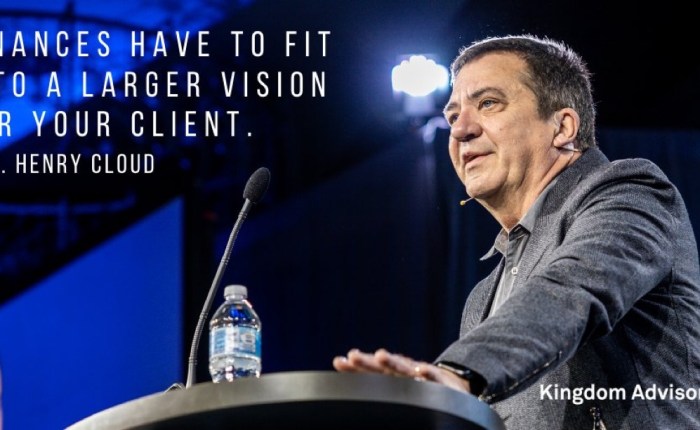
I was challenged at the 2020 Kingdom Advisors Conference! One of the highlights for me was the idea of having a vision, particularly as it relates to finances. Dr. Henry Cloud spoke about vision and pruning toward that vision. He talked of “pruning the good” in order for the best to be possible. Upon first hearing this, my thought was “I’m happy when my life bears good fruit, (rather than bad)” but the truth is that good is often the enemy of best. We must prune the good to allow the nourishment to be directed to the best.

As financial advisors, helping people accumulate money is certainly the norm and represents what is good. Clients desire to save tax efficiently and utilize TFSA’s or RRSP’s for short term or long term goals. When you meet with your financial advisor, particularly this time of year, the conversation usually goes toward saving enough to maintain the desired lifestyle for the rest of your life. That’s good, but is it the best?

Have you ever considered what your vision is for your finances? What is the ultimate purpose for the funds accumulated? Until my thinking was challenged, I never realized that a vision for finances was even worth my consideration.

We’ve probably all heard this proverb that references vision: “Where there is no vision, the people are unrestrained …” Or “Without revelation people run wild, but one who follows divine instruction will be happy” Prov. 29:18 CSB. It is often quoted from the KJV where it declares that “without vision, the people perish.”

The Hebrew word paw-rah’ means “to perish”. Paw-rah’ was the word used in a biblical proverb where a woman’s hair was let flow out of its covering (hairband). Unconstrained in the wind her hair is directionless and blown in all directions.

The word means “to let loose” or “to ignore, reject” and in another sense “to let slip through the fingers.” If you make the connection to your finances, you begin to realize how important a vision is because without it, the discipline to manage finances is lacking. In other words “where there is no vision (revelation from God), ‘the people are undisciplined/get out of hand’.”

When the purpose for your wealth lacks vision, it becomes directionless and ends up going everywhere (like the example of hair in the wind). If you don’t have a vision for retirement, you won’t save in RRSP’s and money can slip through your fingers. On the other hand, when you want to make a major purchase (like a house), you begin to set aside funds for a down-payment, simply because you have a vision.

The natural thinking around money is that what you earn is for you and your family. In other words, you earn to provide for your family, which includes pleasure and enjoyment (vacation). I’m sure you would agree that this is good because your funds are being directed to align with your vision. However, is there a greater vision? Dr. Cloud challenged me deeply and now a year later, I’m still considering how I should “prune the good” so nourishment can flow to the best.

In Randy Alcorn’s book Money, Possessions & Eternity he tells this story:

At the end of the movie Shindler’s List, there’s a heart-wrenching scene in which Oskar Schindler – who bought from the Nazis the lives of many Jews – looks at his car and his gold pin and regrets that he didn’t give more of his money and possessions to save more lives. Schindler had used his opportunity far better than most. But in the end, he longed for a chance to go back and make better choices. This life is our opportunity.

Perhaps this is as good a time as any to take the advice of the Old Testament prophet:

Write down the vision and inscribe it clearly … so that the one who reads it may run. (Habakkuk 2:2 NASB)

Have you ever thought about the consequences of not having a financial vision?

I Lost My Watch

I Lost My Watch

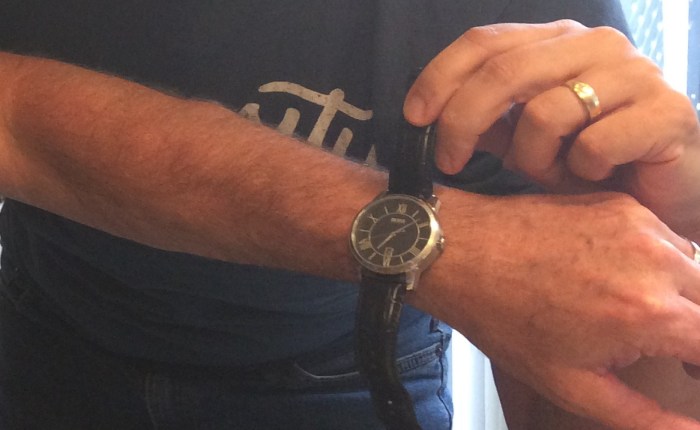
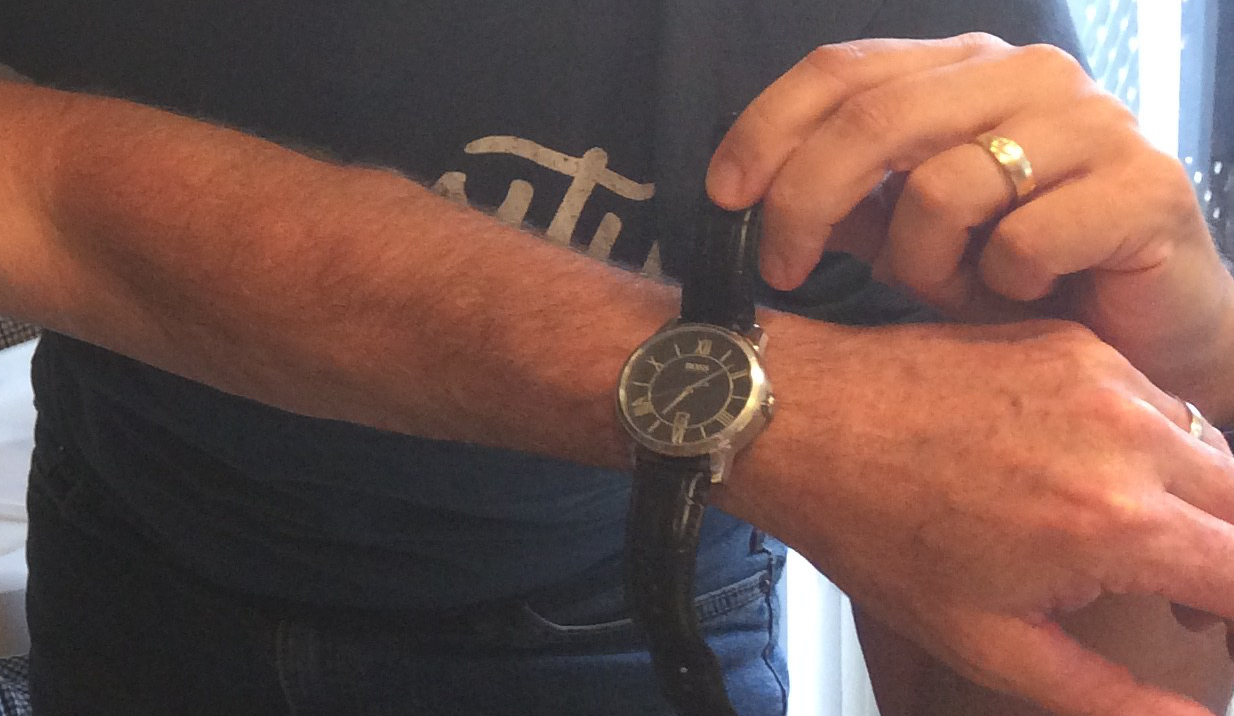
In April 2015, I transitioned from 24 years as a financial planner and became the National Director for Kingdom Advisors where I now connect with Christian financial professionals across Canada. At that time, I was given a Hugo Boss watch from a fund company which meant a lot to me because it was a symbol of an important time of transition in my life.

Fast forward to August 2017 – my wife and I flew back to our home province for a few weeks. We were blessed to have friends who offered us their car to use while we were there. Let me interject a little about my friends, Keith and Alma: we have spent sufficient time together to be completely comfortable with them and they really understand that “The Lord owns it all.” To illustrate our relationship, I sent this text to them when we were about to fly back home: “So thankful for the use of the BMW the Lord blessed you with. Note: I avoided saying ‘your vehicle’ because I know you understand that what you have is the Lord’s. You are such a blessing!!”

After we arrived home from our trip, I searched through every piece of luggage and pockets of my jacket but could not find my watch. We called back to my in-laws, where I thought I had likely left it; they searched the room where we stayed. No watch. We called Alma and asked her to look in the car, but the result was the same – no watch found. We called the airport thinking I may have left my watch in the tray when I went through security.  Again, my watch was not found.

Where was my watch? It was lost and I learned today (May 22, 2018) that it actually had been in Alma’s car for all these months, completely hidden under the front seat.  The car had been cleaned several times since August without discovering the watch. In April, when the car was driven over a bumpy road, Alma’s sun glasses fell on the floor underneath the seat and when she reached for them, she pulled out the watch!

The problem was she had completely forgotten that I had even borrowed their car and her immediate action was to send  messages to those she knew who had recently used her car.  The response every time was “I didn’t lose a watch.” When the watch was found, the battery was dead so they thought that it may have been there for a long time, maybe even before they purchased the vehicle.  Could it belong to the original owner?

Here’s the amazing part of this story: Alma’s husband, Keith didn’t even know I had lost my watch on my visit. He took the watch, replaced the battery and began wearing it on occasion. For me, any hope of finding the watch was long gone, even when they texted and said they were coming for a visit. They arrived at our house and we enjoyed catching up in conversation over a delicious meal. I had no thought about the watch until I saw it on Keith’s arm. I felt a little awkward at first and did not want to interrupt the flow of conversation. How could I ask about the watch or where and when he had found it? Maybe I should just ask, “Where did you get such a nice watch?” Our conversation continued and out of nowhere, Keith lifted his arm to look at the watch and then said, “I have to change the subject: Lorne this watch is yours!”

Seriously! We were all shocked at the quick change in conversation and I realized how the Lord cares about the little details that concern us, especially regarding something that was lost. Keith said, “I just felt the Lord say, ‘This is Lorne’s watch.’” I realized that the Lord was using this circumstance to give Keith more confidence to follow the Lord when prompted. It confirmed to him that he could trust the still small voice of the Lord.

7716F8B3-48AE-43CD-813E-8F201CA12EF4
Many times Keith doesn’t even wear a watch. He could have easily worn a different watch when he visited, or no watch at all. Was it just coincidence that he chose to wear the Boss watch for his visit to my house?

Here is what I realized from this whole thing: the Lord is interested in using every day situations to help us be more sensitive to His promptings.
What is most amazing about this story? It’s not as much about my lost watch being found as it is about a man being sensitive to know when the Lord is speaking to him and having a willingness to act on it. Do you have the confidence to follow the inner promptings from the Lord?

Reckless Love & The Cop Who Didn’t Shoot

Reckless Love & The Cop Who Didn’t Shoot

The news is filled with the shocking story of the Toronto van attack where 10 people have been killed. We seem to have become more accustomed to this sort of violence in Europe or America, but not Toronto, so close to home. We have family in Toronto and it is only hours from where we live!

After reading the article published at Maclean’s written by Scott Gilmore entitled: Toronto Van Attack: The Cop Who Didn’t Shoot, I couldn’t help but think of the Christian song: Reckless Love, since I have already written two blogs about this song. No doubt, the actions of the perpetrator were violently reckless but could the actions of the officer, Const. Ken Lam also be considered reckless? We have likely all see the video as he stands about 30 ft from the van with his gun pointed at the driver. Gilmore writes:

What was he thinking at that moment? He knew this was the van that had reportedly just mowed down more than two dozen people. He could see the smashed grill. He could see the man behind the wheel. Did he think it was about to explode? Did he expect the driver to jump out shooting? The cop holds his fire.

Screen Shot 2018-04-25 at 7.26.58 AM

It is obvious the driver of the van is looking to be shot, because he pretends more than once, to pull a gun from his pocket. Most of us would probably agree that this man deserved to be shot and killed, after his completely reckless behaviour. Ten innocent people are dead and another 15 injured, but the officer didn’t shoot. Another article said: This officer clearly had de-escalation in mind.

I wonder if some police officers think the actions of Const. Lam might have been a little reckless. Did he realize what the consequences of not shooting could be at that precise moment? After all, there wasn’t much time to think this through.  Only thirty-seven seconds elapsed from when the driver emerged from his van, to when he was face-down on the sidewalk. Not one shot was fired!

Const. Lam is rightly being praised because he didn’t shoot. The shooting of the driver was the expected outcome; after all, it is usually how the story ends.

Gilmore concludes his article this way:

We kill each other out of hate, or fear, or ignorance, or duty. Sadly, we understand this instinct well. This is the dark side of humanity. And rightly, we are mesmerized by the horror of it.

But there is light inside us too. We also possess the instinct to keep each other alive. This part of us can be more difficult to understand. But it deserves our devotion much more than the act of killing does. These moments of humanity are not uncommon, but they are precious. It would be good if we could remember that about Toronto, remember the cop who didn’t shoot.

Maybe it was the light inside Const. Ken Lam that made the difference and didn’t take that drivers life, even though we might agree he deserved to die. The driver of the van exhibited completely reckless actions motivated by hate. It can easily be argued the cop may have also acted recklessly, motivated by the light inside him, and in the opposite fashion with such a positive result.

The song Reckless Love says in regards to God’s love:

I couldn’t earn it, I don’t deserve it, still you give yourself away. Oh the overwhelming, never ending, reckless love of God.

Many people are not able to wrap their heads around the thought that God can love humanity recklessly despite how depraved our behaviour is at times. Doesn’t God reach out to us to give us what we do not deserve? Didn’t this cop demonstrate “Reckless Love” (mercy) in a most beautiful way?

The Power of Sound

The Power of Sound

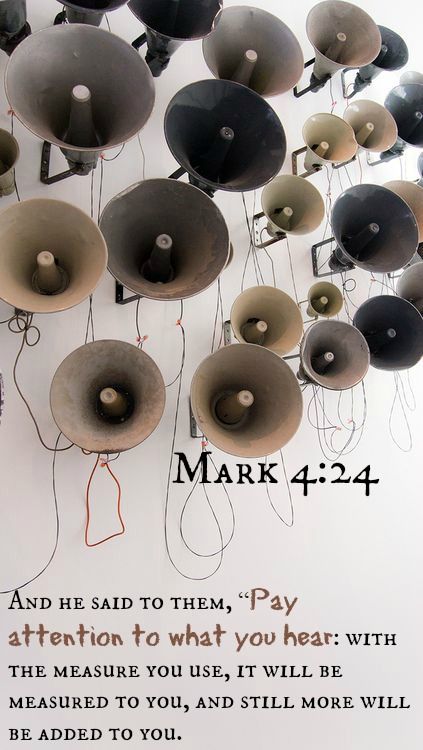
I had the opportunity to speak recently at a local church and chose to talk about the impact of our words. In essence, I began to walk through what words actually become as we speak them and the potential impact of those words on those who hear (including ourselves).

I quickly referenced Job 4:12-14 to demonstrate the path words take within us and how they are able to impact us. “A word was brought to me in secret; my ears caught a whisper of it. Among unsettling thoughts from visions in the night, when deep sleep descends on men, fear and trembling came over me and made all my bones shake.” We are truly complex creatures and what we hear impacts us more significantly than we realize.

If you look closely this verse reveals what words become:

  1. Firstly, “a word” was heard or became a sound.
  2. Then came “unsettling thoughts
  3. And “visions in the night,
  4. Which developed into “fear and trembling
  5. Finally it “made all my bones shake.

All this disruption came because of a whisper in the ears. How is this even possible?

The Power of Sound

Until I did some research, I didn’t realize that sound actually creates, organizes and forms all the basic fundamental shapes found throughout the known universe. For more than 50 years, scientists have proven this to be true. Interestingly, these forms are referred as “Sacred Geometry,” which is said to be a discovery of man, not his invention.

Take a look at an amazing video demonstrating the effects of sound being played underneath sand pebbles on a metal plate. The sound causes them to move and organize into geometric shapes and the higher the frequency the more complex the shapes (just watching for a minute will illustrate).


Sound is a type of energy made by vibrations. So if you think about throwing a rock in still water, the resulting rings of waves are similar to the effects of sound. It is interesting that irregular sound waves create noise, while regular repeating waves create music.

Researchers have also discovered that we pay more attention when an emotion (such as happiness, sadness or anger) is expressed through vocalizations than we do when the same emotion is expressed in speech. So sound itself then, may be more powerful than we typically give it credit. Have you heard the proverb: “a joyful heart is good medicine?” If you stop and consider how joy is expressed, it is usually in the form of laughter (maybe some of the healing is through the sound itself).

Consider our lives at times; there can be so many different inputs with emotional attachments (like anger and frustration) and the result is often noise. Joy, on the other hand, is medicine because it produces regular repeating sound waves, having an impact that is like music to our ears!

Elba Mueller explains the Power of Sound  by referencing one of the most amazing experiments, conducted by Doctor Masaru Emoto, who gained worldwide acclaim for his groundbreaking research and his discovery that water is affected by vibrational sound in some very surprising ways.

When I read this, my immediate thought was about creation (in Gen. 1), when “the Spirit of God was moving over the surface of the waters.” I’m thinking those waters were affected by the vibrational sound because “God said.”  It seems the sound of God’s voice resulted in the earth changing from empty to being filled.

In his experiments, Dr. Emoto analyzed the formation of differently shaped crystals in water as it was exposed to different sounds in different forms. Part of his research included verbal affirmations, thoughts, music, and even prayers from a priest. He focused on verbal affirmations of love and gratitude as they were being directed toward water that was sitting in a Petri dish. He then analyzed the water under a microscope and took before and after pictures to document the change.

pay attentionDr. Emoto and his team observed that after the experiment very beautiful crystals had formed in some of the frozen water samples where the positive vibrational waves were directed. Dr. Emoto then exposed water samples to music from Mozart, Beethoven, and other classical composers and found that beautiful crystal shapes formed in these samples as well.

He also experimented with people saying things like “you fool,” “I will kill you,” and other unpleasant phrases using a harsh tone. Dr. Emoto found that ugly, incomplete, and malformed crystals were formed in the water samples exposed to these negative expressions and tones.


Dr. Emoto concluded that any sound is vibration, and vibrations such as music and other positive sounds including the human voice can be a form of healing energy.

Here is what I find fascinating: on a 3D level the body is more than 70% water. If crystals formed in water from sound vibrations, then it seems pretty clear that the sounds and words we hear impact our bodies. Think about your words and the tone used expressing these words. I think it is fair to say that the vibrations we make when we speak are either forming something beautiful or something ugly, incomplete or malformed in those who hear.

When you talk with your children, spouse, neighbours, clients or colleagues; what impact is the sound of your words having? Are they building up or tearing down?


What Have I Become?

What Have I Become?

We are all on a journey in life and the one thing that remains constant is change. My wife recently took on the task of capturing some of our home videos (30 years worth). These include so many memories and changes, from hair styles to the way we dressed. The music at our youth events seemed radical to some at that time, but now, much heavier music is typically used in many worship services on Sunday mornings all across North America.

TrumpThink about politics for a moment. Just look back one year when the United States was in the midst of an election campaign. Let’s be honest, when you first heard that Donald Trump was running for President, how many thought he would actually become President? Most didn’t believe he had a shot at becoming the candidate to represent the Republicans in the run up to the election, let alone be in the presidential race. For many, the unthinkable happened … Breaking News: Donald Trump is now the President.

How was this possible? Many were left wondering how this could happen. Think about one of the things that politicians do everyday. They talk a lot, sometimes getting themselves in trouble because they say the wrong things. Things change because there are people who speak to influence others to bring about that change. 

For America, this was a major change. What was the basis for that change? I think you will have to agree that media of all kinds, was and remains a major influencer that results in significant change in our culture. Have you ever felt outrage when you hear about people who have been unfairly mistreated? Often times we hear about these types of circumstances through some form of media. When there is frustration over an issue, the media drawing attention to it can be the very means to bring change.

The fact is, whatever media you tune into begins to shape you and slowly your opinions can change, sometimes without even realizing it.

Change is constant and often comes through relationship and communication. Here’s an example in my life. I met a pastor in the early 2000’s who was a cyclist. He would often ride 30-50 kilometres (20-30 miles) at a time, and then on many Saturdays, he would double that distance. I first thought the guy was nuts, until he looked at me and said, “You would make a great cyclist.” Well, I wasn’t involved in any other sport and knew I could use the exercise, so I bought myself a bike and started. First, it was shorter distances, but in a very short time, I was riding those same distances too. Before long, I was challenging myself and one day, rode 120 kilometres (75 miles). My point is this: I became a cyclist, because someone said, “You would make a great cyclist.” I agreed with that statement and decided to become what I was told I could be. 

In 1991, I became a salesman of life insurance, partly out of necessity, but also because I was told I would be good for the role.

On 3.16.2017, our son, became a father, making me a grandfather. Well how did that happen? Without making this a PG rated blog, allow me to explain: It started with a conversation. Cathy (now my wife) and I, had our first date in May 1985. We talked together a lot on that evening. We shared our dreams and visions for the future and discovered that we had so much in common (at least until we got married, but that’s a story for another day). Well the words we shared eventually led to our marriage, where we publicly spoke our commitment to one another (before God and this company, I believe is how it traditionally goes). I still recall memorizing our vows in which we promised to “speak words of grace that would build one another up.” Maybe, I remember that so well, because it was one of the most difficult parts to keep.

IMG_2027

Well 25 months after those vows were spoken (to the very day), our son, David was born. He made similar vows himself when he was married (20 years later).

Here is the point: change comes to our lives because words are spoken.

Marriages happen because words are spoken (vows), divorces happen for the same reason. Politicians are elected in many cases because of promises made (words spoken) and not re-elected in other cases because promises were broken.

We are constantly becoming or changing because of the influence that comes into our lives through media (words that are spoken to us). You may not even realize it, but you are actually very much an influencer, and are helping others become who they are. The words you speak are more important than you realize because they are agents of change and with them you impact those around you.

Interestingly, the Bible says “the word became flesh” referencing, of course, the coming of Christ to live on this earth as a man. The Bible is the only book that has the claim of being alive and still desires to become something, or bring about change in us.

My son and daughter-in-law have discovered that when new life entered their lives, change was immediate. In my next few blogs I will walk through the impact  words have within us and how they impact what we become.

So let me ask you this: How have words spoken to you impacted your life? What change are you bringing in others through the words that you speak?