

I read the story of the prodigal son this week. Considering the context of this chapter in Luke’s gospel, the focus is on the things that are lost: the sheep, the coin and the son. The other consideration around loss that is seldom spoken about is the loss of wealth.
What a challenging decision it must have been for the father when the son asks for his inheritance. I expect the father may have known or would have at least suspected how the son was likely to handle the amount he agreed to transfer to his account. Parents usually have some idea about the path a child may choose to walk, especially when they ask for money. Did he know that the son was, in many respects, already lost since he was discontent and felt receiving these funds would answer this discontentment? I have never considered before that maybe the father knew that the only way for his son to truly “be found” and “come to his senses” was to give him his inheritance.
At the time of writing this blog, the verse of the day in the Bible app is this:
Do not love this world nor the things it offers you, for when you love the world, you do not have the love of the Father in you.
1 John 2:15

I have never connected these verses with the prodigal son before, but there is an alignment. There is a competition in each of us for our hearts. What the prodigal saw in front of him was pleasure and possessions; without realizing it he being pulled from the love of the father. Jesus revealed the greatest competitor for our hearts.
No one can serve two masters, for either he will hate the one and love the other, or he will be devoted to the one and despise the other. You cannot serve God and money.
Jesus – Matthew 6:24 ESV: English Standard Version 2016
In some sense, maybe the father was actually choosing to invest in his son’s future by giving the inheritance. The story reveals that the wealth given to the son would be completely consumed, so in that sense the return on investment (ROI) was not that great. However, the son hits rock bottom and decides to return to the father. It seems the father was willing to take a loss on the financial side in order for his son to come back to who and where he was supposed to be. The money was lost but the son was found and the rejoicing begins. The lost sheep, the lost coin and the lost son were recovered, but likely the lost wealth was not found. It seems the father was ok to sacrifice the wealth to save the son.
Ron Blue shared a story about parents completing their will and interestingly, their son had a lifestyle they did not approve of. They were thinking because of this they might “cut him out of their will.” Ron asked an important question: “What is the likelihood of your son returning to the Lord if he receives nothing when you pass on?” They had to admit that the chances were nil. Then Ron asked, “Well then, what’s the likelihood of your son returning to the Lord if he IS included in your will?” The fact is, his heart would be more open to the Lord if he was included in their will. I believe that is the heart expressed by the father of the prodigal.
It seems clear to me that one of the overlooked messages that can be taken from prodigal son is this: It’s more important to pass on wisdom to your children than it is to pass on wealth. We need to practice the wisdom principle.
“If you pass wisdom to your children, you probably can pass wealth to them. If they have enough wisdom, then they may not need your wealth.”
Ron Blue, Splitting Heirs, page 70
When discussing the transfer of wealth to children, Ron recommends asking yourself three questions:
- What’s the worst thing that can happen if I transfer wealth to ___________?
- How serious is it?
- How likely is it to occur?
Preparing the next steward to receive any wealth we transfer is a significant part of a parents responsibility.
Is it possible that the prodigal gained enough wisdom to be a better steward in the future? Are you intentionally passing on wisdom to your children? Sometimes more is “caught” than “taught” and our children pick up our wisdom unintentionally.


 Think about the business of family for a moment – isn’t it truly about legacy planning?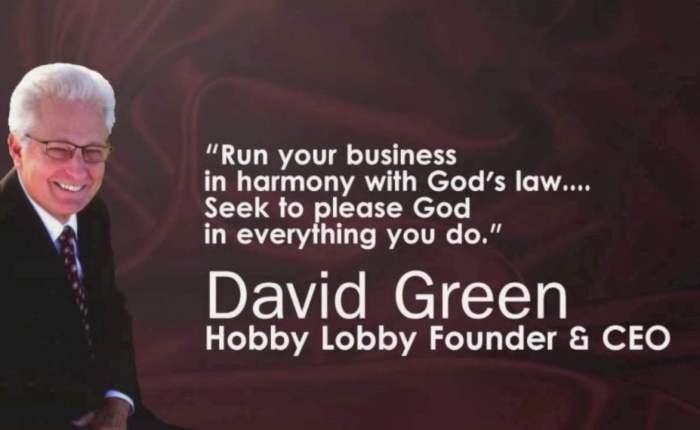
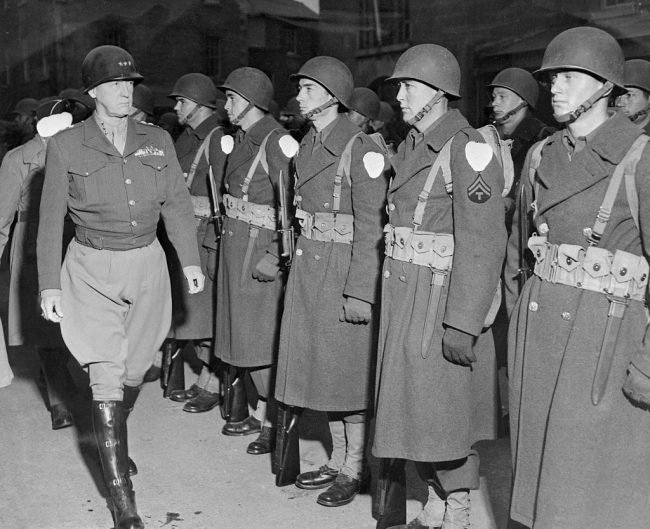 General Ann Dunwoody was walking down the street when she saw a soldier in uniform walking with his hands in his pockets. Anyone who’s spent time in the military knows that this is a big no-no. Dunwoody could have literally walked by the mistake and not addressed it. It’s something small, it wasn’t impacting anyone at the time, and the kid probably just forgot. It wasn’t anything overtly heinous. As a general, though, she knew that if she didn’t correct the error, she would be, by the sin of omission, setting a new lower standard for that soldier. So rather than letting it slide, she approached him, kindly addressed the problem (rather than yelling at and demeaning the young guy), and reinforced the ideas of discipline and attention to detail.
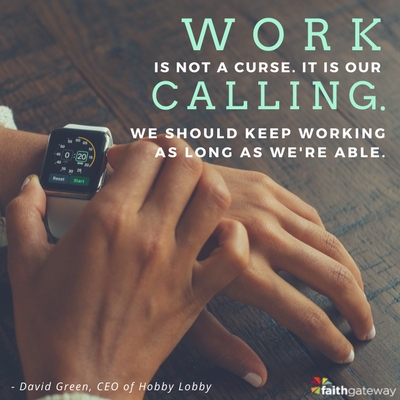 We usually make the same mistake when we categorize our work (or business) as secular, separating it from the sacred (calling). Rather than sensing the pleasure of God through our work, we often consider our work less than God’s calling. It seems that David Green felt like a black sheep because the rest of his family were “ministers” while he was in business. However, when we serve others (in our work), we are actually serving the Lord, not just men (Eph. 6:7) and can fulfill the call God has placed on our lives. Here is a great piece of advice: Whatever you do, do it enthusiastically, as something done for the Lord … (Col 3:23).
 The part that I found most interesting is the corporate structure of Hobby Lobby, where the shares are owned by a trust rather than by family members. This speaks to the fact that the Green’s are stewards of the company and the corporation is actually held in trust. This means if the company was to be sold, 90% of the value would go to a foundation and subsequently distributed to the Lord’s work. Typically, a business is passed down to the next generation, then the next, but in the case of Hobby Lobby, the family cannot actually touch the assets. Since these assets are seen as under God’s ownership, the corporate structure reflects that and is actually referred to as a “stewardship trust.”
  This past month, Cathy and I celebrated 30 years of marriage. Over the years, we have gathered the family together for a specific purpose but in October, we had a meeting that focused on inheritance. This idea came from a book by Thomas Deans called Willing Wisdom, where he suggested a family should have this type of meeting every year. I saw this intentional time as an opportunity to pass wisdom to my heirs before the time of any type of wealth transfer.
 Lorne Robinson's Blog