Proving Your Faith as a Financial Advisor

Proving Your Faith as a Financial Advisor

We all have aspirations in life that often mean we need to “prove” ourselves first. If you consider one’s experience to apply for a new position, we put together a resume to prove that we are qualified to do this job. Even more than that, we want to demonstrate that we are “the best” candidate to be hired for this role.

What exactly are we trying to prove? For financial advisors, many have set a goal to be the most trusted advisor – therefore attracting clients and business relationships to them. That seems to make sense but as a Christian professional, is this the best goal?

Since I read Matthew 3:8 a few weeks ago, I haven’t been able to get it out of my mind. John the Baptist, was preparing the way for Christ by giving this instruction:

“Prove by the way you live that you have repented of your sins and turned to God.”

John was really asking if they had any fruit in their lives that demonstrated that they were living a life surrendered to God.

In other words, is there proof in your practice that sets you apart or makes you unique from those who have no relationship with God? In your conversations, the way you use money, your business practices, your marriage and family relationships – all these should be positively impacted because you have “turned to God.”

John’s message and also that of Jesus, called people toward repentance – a change in thinking. When we change the way we think, the result is we change our behaviour – what we do. Here’s the big question: Is there proof in your life and your work that you have “turned to God?”

My question to Christian advisors many times is this: Is there any difference in your advice to clients because you are a Christian? Here’s how one advisor responded:

After going through the CKA material this past year and spending time with my cohort, I have learned a lot. The CKA® training and shared learning experience with my cohort has changed my perspective on my role in the financial business. I have been encouraged to practice these Biblical principles in my personal life and incorporate them into my business. 

When meeting with clients during their last review, I decided to add to the agenda a discussion about their legacy planning & giving goals.  I wasn’t sure how the clients would respond as this was out of my typical market based conversation (and personal comfort zone). Thankfully, the clients very much resonated with the agenda item and the questions I asked about their giving goals. We had a truly life giving conversation about their ministry passions, future opportunities to give, and how we can help them achieve these more personal goals. I believe the clients went from concerns about short term market trends (which are out of our control anyway) to a place of gratitude about how God has blessed them and excited about how God could use them (and their resources) to bless others. I hope and pray I can have more review meetings like this!   

For advisors in the cohort it has meant weekly meetings over five months with many hours of study to be prepared for the discussion times together. The result in the advisors words:

  • 1) a changed perspective on my role in the financial business
  • 2) life giving conversation(s) with clients
  • I added the “s” – I’m confident more life giving conversations will follow because of the changed perspective.

Therefore let your lives prove your change of heart

Weymouth New Testament Matthew 3:8

Discover Your Why: Fulfillment in Work and Life

Discover Your Why: Fulfillment in Work and Life

Well the Labour Day weekend is upon us and for many, it marks the end of a season and shifts students back into the school year and those at work into a busy fall. Mark Twain helps me see

“The two most important days in your life are the day you are born and the day you find out why.”

Mark Twain

Finding your why is truly what makes your work significant. I have heard it said that your job is what an employer pays you to do; your work is what you were born to do. I’m convinced that when you discover your why, you truly live out your calling in life.

Ken Boa in his book, Conformed to His Image says:

“Our primary calling is to know and love God. Our secondary calling is to express this relationship in everything we do and with everyone we encounter.”

As a teenager, I felt a “call” on my life and the best way I could interpret it at the time was to become a pastor. However, the majority of my career has been in the financial services industry, providing insurance and investment advice. My perspective was that my work as a financial advisor was my job (secular) and I believed my “calling” to ministry was my true work (sacred). As the years passed, I questioned if I had “missed my calling” or did I choose the wrong profession?

My problem was that my secondary calling (my work as a financial advisor) was somehow disconnected from my primary calling (to know and love God). Ken Boa explains it this way:

“If the secondary is not related to the primary, we slip into the error of dichotomizing the “spiritual” and the “secular” when they should really be integrated. When this happens, our relationship with the Lord is disconnected from the everyday activities of our lives.”

I certainly felt I was serving the Lord in my business, but somehow the everyday activities of my work became disconnected from my calling. My focus as an advisor was on growing my business, developing relationships and serving clients. While that ethic was typical of this industry, my secondary calling lacked the perspective that only comes by incorporating my primary calling. My work as an advisor (secondary) needed to be an expression of my primary calling. Dr. Ken Boa explains it this way:

“Secular work becomes spiritual when done to the glory of God. Spiritual work becomes secular when done to please and impress men.”

My level of fulfillment through my work reached new heights when the secular and the sacred were merged. This seems so simple now as I reflect, but it required a shift in my perspective. Recognizing the opportunity to love and bring glory to God (primary calling) through my practice (secondary calling), transformed my work life and brought a fresh perspective. In essence, I was transformed into the person I was born to be and now Labour Day becomes important – not the day I was born, but a better understanding of “why” I was born. Dr. Ken Boa sums this up perfectly:

“When we keep our primary calling first and seek to express it in and through our secondary calling, we become more holistic in our thinking and practice.”

Our Relationships Don’t Belong to Us!

Our Relationships Don’t Belong to Us!

I read this statement in a devotional recently and was challenged with the thought. Paul David Tripp writes that:

Fellowship is God caring enough to put people in your life to encourage, rebuke and comfort you.

New Morning Mercies, Paul David Tripp (Aug. 19)

I’ve been in relationship with some people for many years now, which begs the question: “Why are these people (or this person) in my life?”

Tripp explains it this way:

“We cannot allow ourselves to have an owner’s view of our relationships, as if they exist for the sole purpose of our happiness. Our relationships don’t belong to us – They belong to God for his use, for his purpose.”

This changes our perspective – if we don’t own these relationships and they are not “about us” solely, there must be a reason, a deeper purpose. The unseen part of relationship is how they came to be and also why they came to exist.

If we take the “owner’s view” it means either we or the person we are in relationship with took the initiative to establish contact. This easily excludes God’s part in this relationship and means we can miss seeing his purpose.

My wife and I met while we were attending the same college. We take for granted our chance meeting at an airport in late April 1985 and then meeting again the following weekend in her hometown. This was the only weekend she was home because she was between semesters while attending university. That chance weekend meeting clinched my decision to attend the same university that summer where our relationship began to develop. The rest, as they say, is history.

Was this simply a series of coincidences, where each of us initiated our relationship to spend time together? Or was God more involved than we often give Him credit for?

I choose to believe that my relationships are an example of God caring enough to infuse people into my life for His use and His divine purpose.

One of the other life-changing experiences for me was joining the community of Christian financial professionals, known as Kingdom Advisors. It was a game-changer when it became clear that I didn’t have to separate my faith from my work as a financial advisor.

Here’s the advice from Kingdom Advisors:

“Don’t spend another day feeling divided between your faith and your career. Get certified by Kingdom Advisors and fully integrate your faith into your financial practice.”

I’m looking forward to connecting with advisors in a cohort this fall (meeting weekly starting Sept. 4th) to walk with advisors through 20 Modules of Core Training. This journey together will be a key to fully integrate your faith into your financial practice and continue to build God-ordained relationships.

When You Don’t Run Alone: 1924 & 2024

When You Don’t Run Alone: 1924 & 2024

I did have opportunity to watch some of the Olympics that just concluded and one of my highlights was Canada running in the men’s 4×100 Relay race. This was quite a surprise as the announcer shared: “They got the baton around the track faster than anybody else! With four men who didn’t have the individual clock speed here at these games. What a reversal of fortune for these men here tonight.” They did not medal in the individual races they ran, yet had the best time when they ran the relay.

You can watch the video here: https://www.cbc.ca/player/play/video/9.6476926

The key to their success is how they worked together as a team and were able to win the gold medal, which they were unable to accomplish when running alone.

This reminded me of the Olympics 100 years earlier – 1924, long before I was born, but I have read and previously written about Eric Liddell. He was a devout Christian and missionary to China, who felt it a priority to run in the Olympic games. His sister felt that his training for the 1924 Olympics deterred him from returning to China as a missionary. I’m confident she saw his calling and work in life was being a missionary, not running. However, Liddell said, “I believe God made me for a purpose, but he also made me fast! And when I run I feel His pleasure.”

But when the timetable for the Games was released, the 100m heats were on a Sunday and Eric Liddell dropped a stunning revelation. The Christian Sabbath was the Lord’s Day and there was nothing in this world that could persuade him to run.
Liddell’s decision meant he had to give up on his strongest event and switch his focus to the 400m. Instead of a straight dash to the finish line, this event required the stamina to maintain the pace around a full lap of the track, described at the time as the quarter-mile race.

https://www.bbc.com/culture/article/20240705-olympics-hero-eric-liddell-and-the-real-story-behind-chariots-of-fire

Fellow Scottish athlete Tom Riddell said this longer distance exposed Liddell’s idiosyncrasies, but he could still rely upon that electrifying pace. Riddell told the BBC he had asked Liddell about his tactical approach: “In his own words he said, ‘Well, when the gun goes, I go as fast as I can, and I trust to God that I’ll have the strength to do the second half.’ And I think he really did.”

The truth is Liddell was running an individual race but he was not running alone!

We usually would not class running or involvement in a sporting activity as spiritual, or for God, but simply a physical activity. For Liddell, running wasn’t just a fun activity but a God honouring one.

The mistake we often make is in categorizing our activities, whether it’s exercising or working as a non-spiritual activity. We view our walking, running, or cycling as a physical activity and our work as secular. In doing so, we separate it from what is sacred, rather than sensing the pleasure of God in that activity.

Here is a great piece of advice: Whatever you do, do it enthusiastically, as something done for the Lord … (Col 3:23). The reality is that when we serve others (in our work), we are actually serving the Lord, not just men (Eph. 6:7). If we can say when we walk or work that “we feel His pleasure,” God is truly walking and working with us and through us. This adds a brand new energy to our efforts. When you work, you are not working alone.

It’s not original to me but here’s a great question and the best advice:

Don’t you realize that in a race everyone runs, but only one person gets the prize? So run to win!

The Apostle Paul – 1 Corinthians 9:24 NLT

Celebrate Canada Day Weekend

Celebrate Canada Day Weekend

As I went for a bike ride, my mind began to wonder about what I should celebrate, particularly on this Canada Day weekend!

It made me think about a question that was posed to me back in 2014, around the time I was making a very significant decision. I was a financial advisor with an established practice in Newfoundland, but was asked if I would consider working with Christian advisors across Canada. The question went something like this: “Is God calling you to work with your clients (in your home province) or is He calling you to work with financial professionals across the country?” We moved to Ontario in 2015, so that answers that question.

Two flags fly on my back deck, one from the province we still call “home” and the other is the country where I get to serve financial professionals who are interested in incorporating biblical wisdom in their advice to clients.

Seven things Kingdom Advisors can Celebrate in Canada:

  1. The 113 Members of Kingdom Advisors who have been personally and professionally enriched by completing the Kingdom Advisors Core Training.
  2. The 95 Financial Professionals who earned the Certified Kingdom Advisor® designation.
  3. The 82 Active CKA®s in Canada searchable by Christians desiring to be served by an advisor who aligns with their personal values.
  4. The 14 Kingdom Advisors Study Groups and the 80+ attendees that meet monthly to be equipped as Christian advisors.
  5. The 22 Champions – an exclusive subset of our members who are passionate about the advancement of this industry and are committed to investing their time, influence, and resources to accelerate its growth and development.
  6. The 186 Active Members of Kingdom Advisors.
  7. The 135 Redeeming Money Conference Attendees in 2024.

Living a Legacy

These are some of the numbers but what thrills me most is seeing advisors finding fulfillment and opportunities for ministry in their work. Let me highlight one of our CKA®s from Edmonton, AB. John Kok has shared his wisdom in a dozen churches (based on his recent newsletter). He recognizes the CKA® designation sets him apart as a financial professional, who has pursued faith/work integration to the highest credentialed level in the financial advising world. John shared at our Regional Event in Calgary this May and will lead the Charting Your Legacy Study starting Sept. 24, 2024.

John invited another advisor to the KA Regional Event this May and he already completed the training. Here’s Craig Jensen‘s feedback about the training:

“The one area of takeaway was the focus on prayer before every meeting. There were occasions when I would pray before meetings, but through this training, I have understood now on a higher level the importance of a prayer for every meeting and follow-up prayer. So, focused prayer is the biggest take away for me. I feel very blessed to have been introduced to Kingdom Advisors through John and I look forward to adding what I’ve learned to my ongoing discipleship with others.”  

Advice for the Summer

Tim Jenkins is a CKA® from Peterborough, ON who published a blog entitled : Don’t Miss the Season to Create Exceptional Wealth. I would summarize it this way: The summer season presents the ideal conditions for creating (relational) wealth! Summer is when we take time off and our loved ones and relationships are not usurped by busyness. Let’s be intentional to become more wealthy this summer!

Happy Canada Day!

Where Are You?

Have you ever asked a question even though you knew the answer? This is a common technique used when engaging with children or grandchildren. It’s a great way to help them think about a situation they find themselves in and how they ended up there.

Similarly, sometimes we ask the question “Where are you?” even though the answer seems obvious.

In life, we all have moments where we wish we could make a different decision. Maybe you’ve been there too.

When God asked Adam and Eve, “Where are you?” it wasn’t about their physical location but rather their proximity to Him! It wasn’t about making them feel guilty for their mistakes, or even how their choices was a failure to trust Him when tempted.

It’s easy to get stuck dwelling on our past mistakes and the resulting consequences. But what’s the point of that? The mistake is behind us, and we can’t change it. Instead, we should focus on where we are now and where we want to go. After all, mistakes are just detours on the journey to our true purpose. Let’s not allow them define us or hold us back.

I am reading through the Bible this year and just finished the story of Joseph. If anyone in life was shifted off course, it was Joseph. Having a dream (at age 17), being sold by his brothers, then elevated to a position of authority only to be falsely accused of sexual misconduct, thrown in jail and eventually becoming the second in command in all of Egypt (when he was 30). Where was Joseph? That’s 13 years of utter turmoil when Joseph went from a pit to prison, yet had success even in the darkest times.

Where are you? This simple question has a deeper meaning than just location. It’s an invitation to reflect on where you are in life and where you are meant to be. Taking time to reflect on your relationship with God and your life’s purpose can lead to powerful transformations. Don’t underestimate the power of this question and the impact it can have on your life.

Can you just imagine the scene where Joseph’s brothers meet him 15 years later after causing so much pain and disruption in his life? He is now in a position of authority above all of them. This turn of events likely left them in shock and fear.

What amazes me is “where” Joseph was … not in his position, but in his perspective. Joseph explains to his brothers that yes, “you sold me here” but more significant is the fact that “God sent me before you to preserve life” (Gen. 45:5). Joseph recognized that every difficult situation he faced had a greater purpose than he realized at the time. His story reminds us that our perspective can be more significant than our position.

So, where are you right now? Instead of just naming a place or position, we should consider our proximity to God and the work that He has prepared for us to do. Let’s focus on our perspective and trust that every step we take, even in difficult times, is leading us towards a greater purpose.

As it is in Heaven

As it is in Heaven

As I awoke this morning, my thoughts went to the line in the Lord’s Prayer where it speaks about “His will be done on earth just as it is in heaven” (my paraphrase). I guess that summarizes a deep inner desire within each of us: to live out what God’s will is today, just as God already planned it in heaven.

I believe a person would have a greater level of fulfillment if they believed their activity and work somehow had its origin in a divine purpose for their lives. In essence, knowing God’s will for us (in heaven), and then living it out.

The problem: heaven is not typically our focus. We haven’t been there, so how can we know or connect the plans in heaven with what happens on earth? To be clear, from the very time of creation, earth is separate from heaven. When we fly, we get a little sense of be separated from the earth; It’s like we are shifted into a different realm.

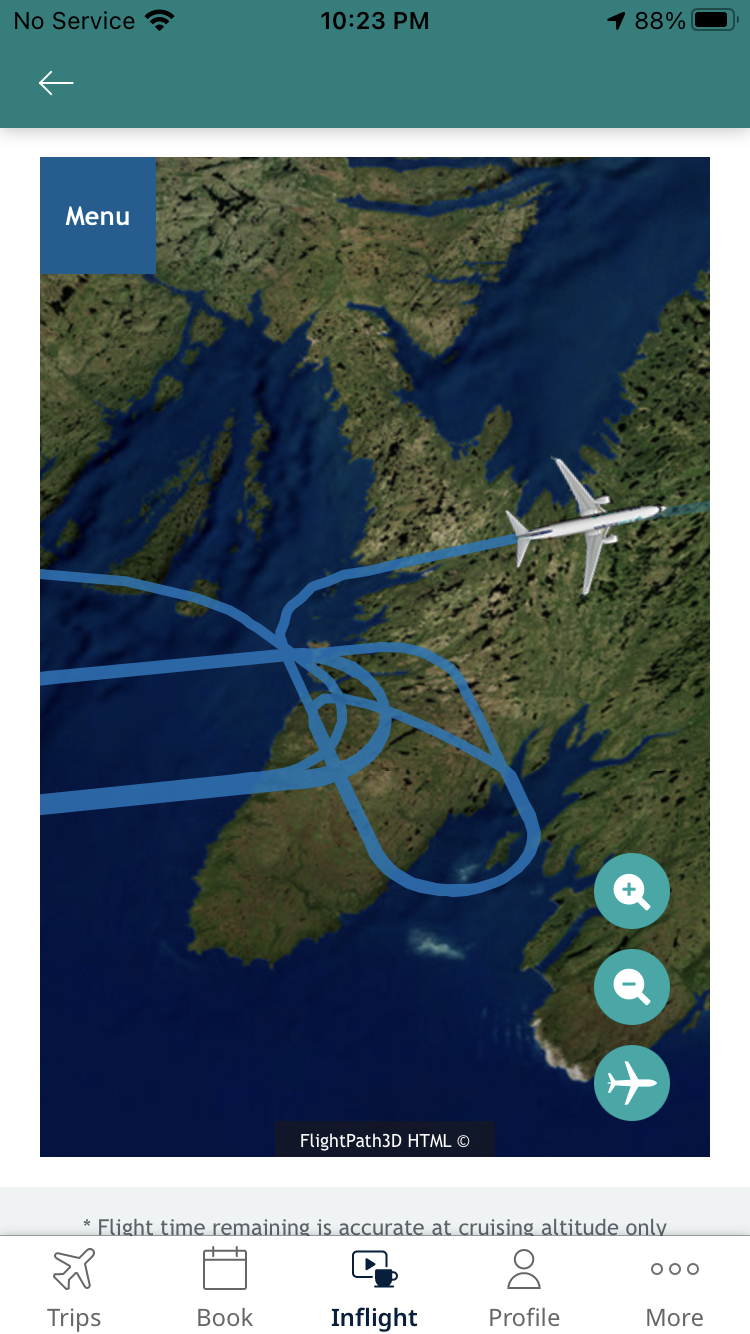
Screenshot of flight path

In August 2021, we flew to St. John’s, Newfoundland. As we approached our destination, the pilot announced that we were unable to land because the runway lights were not working due to a power outage. We didn’t think much of it, but looked at the airplane app and took a few screenshots of the plane circling. Then after about an hour, we began to descend below the clouds into the darkness and rain.

We discovered that the storm had caused a power outage. Until we landed, we had no idea there was even a storm because we were circling above it.

Maybe the Lord’s prayer is telling us that even in the midst of the storms (on earth), we can live out God’s purpose because our perspective is based on being above the storm (in heaven). Maybe that’s why Paul instructed us to set our mind on the things that are above!

Here’s where many people unfortunately find themselves:

“Yet when I surveyed all that my hands had done and what I had toiled to achieve, everything was meaningless, a chasing after the wind; nothing was gained under the sun.”

Ecclesiastes 2:11

Saying that everything is meaningless brings you down (pun intentional), but we must understand Solomon’s point of view.

“I have seen all the things that are done under the sun; all of them are meaningless, a chasing after the wind.”

Ecclesiastes 1:14

The key phrase is under the sun, which is repeated throughout the book. Solomon is sharing an earth-bound perspective. He is only considering life “under the sun”; that is, a human life lived to the exclusion of any consideration of God. From that godless perspective, everything is indeed “meaningless.”

https://www.gotquestions.org/everything-is-meaningless.html

Here’s a prayer that was written by Ken Boa:

Dear Lord, where would I be without Your Word? What would guide me and teach me the answers to the fundamental questions of origin, purpose, and destiny? Human speculation is utterly inadequate for this task, because the answers to these and other questions require a word from without, a revelation that is not under the sun but from above the sun. Teach me to treasure Your Word, and give me the wisdom to read, meditate on, and memorize Your revealed truths—this is the sure foundation upon which to live and flourish. May I be different from the corrupt culture in which I live and value the things that have eternal rather than passing worth. Then I will order my steps with wisdom, prudence, discernment, and good counsel. I want Your Word to make a difference in my life and to be evident to all.

Ken Boa, Reflections Ministries

Is Your Olympics Over?

Is Your Olympics Over?

It’s been quite interesting to watch some of the Olympics this summer and now the paralympics begin. The display of talent in the closing ceremonies and the endurance and strength in the athletes is something that comes through discipline and training. What human beings are able to accomplish is astounding.

Thank you for making me so wonderfully complex! Your workmanship is marvelous—how well I know it.

Psalm 139:14 NLT

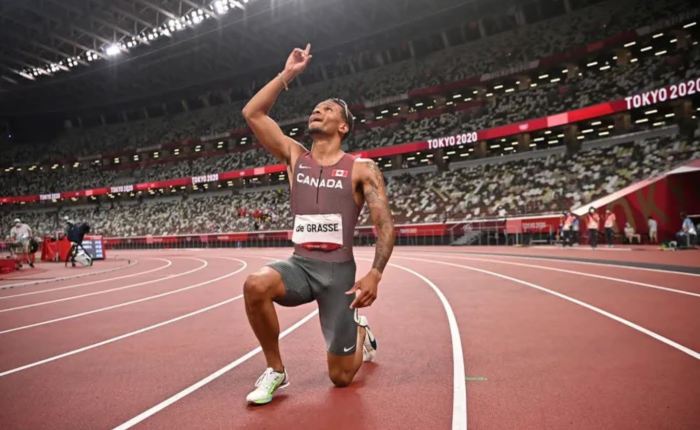
I am certain that not every athlete may consider a higher power when they are competing. I do find it interesting to see a photo of Canadian Andre De Grass after winning the gold in the men’s 200m; he is on one knee, looking and pointing up. It reminded me of a blog I wrote about olympic medalist, Eric Liddell.

Eric Liddell was a devout Christian and missionary to China, who felt it a priority to run in the Olympic games. His sister felt that his training for the 1924 Olympics deterred him from returning to China. He said, “I believe God made me for a purpose, but he also made me fast! And when I run I feel His pleasure.” We usually would not class running or involvement in a sporting activity as spiritual, or God-honouring, but more a physical activity. For Liddell, running wasn’t just a fun activity but a God-honouring one.

Word4Now Blog – June 2017

The Bible describes our bodies as temples and indicates that there is a greater purpose in everything we do, maybe even greater than we realize.

You are not your own, for you were bought with a price. So glorify God in your body.

Paul, 1 Cor. 6:20 ESV

Whatever you do, do it enthusiastically, as something done for the Lord, and not for men.

Paul, Col. 3:23 HCSB

The Apostle Paul made many references to sport like “running in a race” with the goal to “get the prize” and also referenced boxing and wrestling in his writings. This got me to wondering if he might have attended the Olympics. In my search I found this article titled: The Historical Background of Paul’s Athletic Allusions by Jerry M Hullinger which states:

The chief athletic contest in Greece was the Olympic games. Founded in 776 B.C., these games were held every four years.

Many other athletic contests were spawned from the Olympics and there was one held in Corinth. The Isthmian Games form the backdrop for 1 Corinthians 9:24-27.

Paul probably was in Corinth when the games of A.D. 49 or 51 were held. A further reason that lends weight to the idea that Paul attended these games is his profession as a tentmaker. At such occasions, large numbers of tents would be needed to provide shelter for the crowds of visitors …

Even if Paul were not, technically speaking, a tentmaker but rather a leatherworker, this would not have precluded his making or repairing tents or shelters.

It’s quite fascinating to think that Paul’s writings were influenced by these competitions because he was likely an eyewitness to many of these events.

24Don’t you realize that in a race everyone runs, but only one person gets the prize? So run to win! 25All athletes are disciplined in their training. They do it to win a prize that will fade away, but we do it for an eternal prize. 26So I run with purpose in every step. I am not just shadowboxing. 27I discipline my body like an athlete, training it to do what it should. Otherwise, I fear that after preaching to others I myself might be disqualified.

Paul, 1 Cor. 9:24-27 NLT

Some lessons Paul shared from these games:

  • Bring glory to God by using one’s strength and talent, not only in sport, but also in life’s work.
  • Apply the same sort of discipline and training in life as those in sport in order to obtain a crown (earned in the ancient games) or a medal in our modern day Olympics
  • To know your purpose you need to look up (beyond the sun).

Sometimes it’s easy to think that what we do on this earth lacks meaning and purpose and finding fulfilment can be exasperating. There is even a book in the Bible dedicated to “the Futility of All Endeavour” (Ecclesiates).

I have seen all the things that are done under the sun; all of them are meaningless, a chasing after the wind.

Solomon, Eccl. 1:14 NIV

It is natural to only look “under the sun” to discover our purpose. I recently read that the way to discover meaning is to look beyond the sun, into the heavenliness. That’s why Paul encouraged us “to work for the Lord” (rather than men) and this is to “win a prize that will not fade away.” Through the games, Paul was reminding us that our focus can so easily be on the wrong prize.

Paul stated in 1 Corinthians 9:25 that the reason he exerted him­self in his ministry was so that he would obtain an incorruptible crown (στέφανος; cf. 2 Tim. 2:5; 4:8).

Jerry M Hullinger, The Historical Background of Paul’s Athletic Allusions.

Paul’s references to the believer’s prize seem to be related to conflict in the spiritual life, a prize that can be won only if one throws himself and his resources entirely into the struggle.

Ethelbert Stauffer, “βραβεύω? in Theological Dictionary of the New Testament
vol. 1 (1964), 638; and Smith, “Games,” 2:1173.

What a powerful statement: the prize can only be won by a complete investment of oneself and the resources that have been entrusted to our care. Are we putting all our energy and resources into what we have been called to do? Are we looking beyond the sun daily in order to walk in the work that God has prepared (in advance) for us to do (see Eph 2:10)?

Possessing this crown signified spiritual, emotional, financial, and social benefits. Yet as Paul wrote, as grand as this earthly attainment was, it paled in significance when compared to the heavenly reward for the faithful believer (1 Cor. 9:25).

Jerry M Hullinger, The Historical Background of Paul’s Athletic Allusions.

Any recognition or reward for our efforts and accomplishments in the industry that we work in or sport in which we compete, will pale in comparison to the reward we can look forward to. This happens when we invest our lives with a perspective that’s beyond this world.

Just as a side note: My son, David completed some research and did a project using Legos to explore the history of the Olympics in a 7 minute video for one of his classes in university. Thought you might find it interesting.

Can You Be Thankful for Tough Times?

Can You Be Thankful for Tough Times?

A common question during Thanksgiving is, “What are you thankful for today?” I would have to say I am thankful for the people who have come into my life, even for a brief time, to say something significant to me. It is so good to be able to revisit those monumental moments. I am, of course, grateful for the family and friends who have walked with me through many difficult, life-building experiences. In fact, I have come to realize that I am even thankful for those who have been a source of pain in my life and may have helped create some of those difficult experiences. All of them have shaped me into the person that I am today.

I remember one challenging season during my Bible College years (1982-1986) when I was desperate, ready to quit and do something else, rather than do what my heart truly desired. Thankfully, a pastor prayed with me and said I would be a “David and a Gideon.” It’s quite interesting that both of these men felt pretty insignificant (both were considered the least in their families). In May 2019, I was fortunate enough to meet that pastor again and thanked him for his words to me so many years earlier; those significant words that continued to resonate with me through some of the toughest times in my life.

As a young pastor just starting out in my career, I felt rejected by the denomination that I grew up in and where I had trained to be a minister. I was filled with questions and no answers, disappointed because life was not supposed to be this way. That’s when the Lord provided an opportunity for me to enter the financial services industry (1991). I felt this was just a temporary move until the Lord would open another door of ministry for me; after all, God had called me to “preach the word.” I am thankful for the tough times and for those who have rejected me, because without them, I would have never made the decisions I did.

I’m grateful for my wife who documented our journey together these past 34 years (on Oct. 25th this year). She wrote these words that another pastor shared on Sept. 20, 1992, “An open door is coming for Lorne, but he’s not yet ready for it. There will be some frustrating and trying times but we are to look at it as preparation time. We are to cleave to one another and look back at this night.”

Nine years later, I heard these words (Nov. 25, 2001): “Lorne will travel Canada and his ministry will be endorsed so strongly that people won’t be able to question it.” I’m grateful for closed doors because only God knows when and which doors should open. Trusting that God will do this is most difficult in your dark times.

One of my darkest periods was in 2008 after I had run in the Federal Election (and lost), plus the stock market had crashed. I was striving to open doors and get away from this pressure but despite my knocking, the only door that opened meant continuing in the financial services industry. I recall speaking with a counsellor during this period and she said, “You are suffering from rejection.”

I concealed my pain as much as possible but I was hurting in a way I felt no one else could comprehend. I’m grateful that Cathy was so understanding and allowed me to process, yet, pray me through this period. It was during this time that I began studying the topic of biblical financial stewardship in a book by Randy Alcorn, called “Money, Possessions and Eternity.” I am so thankful for men like Randy, Larry Burkett and Ron Blue whose writings have helped transformed my life and have given me much more of an eternal perspective in so many areas.

I’m so thankful that God’s ways are higher than my ways. What I thought was a temporary career in financial planning has turned out to be the work He had prepared in advance for me to do (see Eph. 2:10). I am grateful for the years I spent creating strong relationships with amazing clients who shared things with me that they would never share with a pastor. I was able to guide them financially and personally. Those years actually prepared me to become the National Director of Kingdom Advisors, a ministry to financial professionals to whom I can easily relate because of my own experience in the industry. It’s ironic that when I was asked to consider this role in 2013, my immediate response (without even thinking) was, “I feel like David out in the field shepherding the sheep (my clients), while so many others are more qualified.” It wasn’t until further reflection that I realized those words that the pastor shared with me in college were very true 35 years later.

The fact is when things don’t go according to our plans, we need to be thankful and willing to trust that things are going according to His plan for us. God can use any circumstance or people! It can appear to be anything but good at the time. Even if meant for evil, God works for our good and conforms us to His image (See Genesis 50:20). Are you facing tough circumstances and/or difficult people? Be assured that behind the scenes, God is using these situations and people to help transform you.

(Mis-)Understanding God’s Call

(Mis-)Understanding God’s Call

This summer I listened to a very moving and appropriately titled audio book called Fire Road. It is the story of Kim Phuc Phan Thi which is written as A Memoir of Hope. The book cover shows the Pulitzer Prize winning photograph taken on June 8, 1972 in South Vietnam. The nine-year-old child is running from low flying planes to escape the napalm bombs dropped that day.

Her story is one of physical pain from the burns and multiple surgeries over the years that followed. The book also describes how the government used her story as propaganda for their own benefit, in essence “putting their own words into her mouth” through interpreters. The “Napalm Girl,” as she became known, journeyed through the horrors of war which has given her a platform to share her journey of faith, forgiveness and peace. Her suffering and pain was intense and brought tears to my eyes as I listened. The impact of her life and faith will only be measured in light of eternity. I was struck by the thought of how God could take the horror of her experience and use it to bring redemption to so many.

She was born the year before I was and that day in June shaped her future in a way that she could not have imagined. I honestly have no idea what I was doing on June 8, 1972 but I believe God also allowed things to come my way that were not pleasant. We all face events that determine who we become and what we do in life.

I can recall when I was 15 years old standing in a church that my Mom and Dad pastored. I had an indescribable holy experience in God’s presence. I stared at my mother’s Bible and I could not escape the instructions of the Apostle Paul to Timothy: “Preach the word … do the work of an evangelist and fulfill your ministry.” That time was so impactful that when I was asked about my goal in life for my graduation yearbook, I said “to be an evangelist.”

It was obvious to me that I should study the Bible and enter full time ministry. Little did I know that after less than 4 years into “full-time ministry,” my life would take an unforeseen twist and I would enter the financial services industry. The Napalm Girl can look back at a specific day that changed her life, and I look back at this period of time because it was like a course correction that I could not fully understand. How could selling insurance and investment products help me “do the work of an evangelist?”

God must smile when we ask these sorts of questions. Fast forward 25 years when I am asked if I would consider leaving my financial planning practice to become “a pastor to financial professionals across Canada.” Now that’s something I did not see coming! In the past 5 years (since making this transition), I have met hundreds of Christian financial professionals who desire to better share biblical financial wisdom with their clients (because it works).

Here’s my point: as a 15-year-old sensing God’s call to “preach the word” and “do the work of an evangelist,” all I could visualize was Billy Graham, and possibly doing something like that. I think God was saying, “Maybe not.” It is so easy to misunderstand what God is calling us to do and accomplish in life because we have our own ideas of what life is supposed to look like.

What I know is this: God can use a napalm bomb for ultimate good. Or He can use a job loss that no one could have predicted to bring us to a destiny that we could never envision. His ways are simply beyond our ways. We can trust God even when things seem to be going opposite to our plans.

A very wise man offered this advice that I have paraphrased: With all that is in you, trust in the Lord. Do not rely on what you can understand. In all your ways know him, and he will show you which path to take.

It seems to me that trusting is more important than understanding. Where do you place your trust? Your own abilities? Or God’s ability to position you where you are supposed to be? Do you spend more time trying to understand or learning to trust?