Why are Thoughts and Prayers Insufficient?

Why are Thoughts and Prayers Insufficient?

The headline in the National Post read:

‘Your thoughts and your prayers are insufficient’: Jimmy Kimmel tearfully calls for gun control

Is America’s national Thoughts and Prayers Strategy (TAPS) no longer working? That is a question raised in an article in Maclean’s magazine making statements which can be disturbing to the Christian community.

Here is one example: Unfortunately, there is growing evidence that TAPS may not be delivering the results we would expect from appealing to an omniscient and all-powerful deity.

In other words, thinking about others and praying to God is simply not effective and the results are not clearly evident. We ought to think more about what is really accomplished through “thoughts and prayers” because it seems to be terribly misunderstood, especially in light of recent incidents of violence.

The power of thinking is impactful on the person having the thoughts and only impactful on others when those thoughts are expressed.  Many have probably quoted the proverb that says, “For as he thinks within himself, so he is.” If a person then, is consumed with thoughts of murder and killing, and those thoughts are not taken captive, they will eventually be acted upon and that person can become what was thought about. I would suggest that this is exactly what takes place when murderous acts happen; the thoughts transform the person to become what he is thinking.

The idea expressed in the Maclean’s article is that the thoughts and prayers of US congressman are somehow supposed to alter the behaviour of the American people. Let’s get it right; the thoughts and prayers are to comfort after an event like these incidents  (Las Vegas, USA and Edmonton in Canada) and should not be trivialized.  Maybe it is true that the thinking around gun control needs to change in order to make America a safer place, but please don’t diminish the effectiveness of “thoughts and prayers” for the people impacted by these sorts of incidents.

A most challenging statement for many Christians is this one: This data is very surprising when you consider the power of beseeching God. You would think parting the Red Sea, or smiting the Egyptians with a plague of frogs, would be far more difficult than just reducing gun violence. It is worth noting, however, that most well-known examples of successful celestial intervention in earthly affairs are over two millennia old.

Pray for LVHe goes on to cite the reasons for the non-response from God, which could be denominational, or we are not praying enough, or the wrong people are praying, or praying wrongly (kneeling or not, with eyes open or eyes closed).

When I read these statements it upsets me because in my 50+ years on earth, I have seen God’s intervention. As a matter of fact, without it I would have only been here for 5 years because meningitis would have taken my life. We need to think deeper about the true purpose of prayer.

“Prayer does not change God, but it changes him who prays.” – Soren Kierkegaard

From this quote, we see the focus is really about bringing change within the person who prays. Therefore, the focus of “thoughts and prayers” is actually more about changing the thinker and pray-er rather than those being thought about or prayed for. However, I certainly can testify that both can be transformed by prayer. I wonder if we have really missed the true power of prayer and thereby dismissed its effectiveness. Isn’t prayer about relationship with God, communicating with Him regularly rather than someone we call on only in crisis? Relationship with God through prayer is meant to change us. When prayer changes us, that’s when we can be an influence for change.

Just think for a moment about what God said when he created earth and also man. He said, “Let them (man) rule over the earth.” Mankind has been placed in a position of authority and influence by God, within nations to effect change as it is needed.

“Is prayer your steering wheel or your spare tire?” – Corrie ten Boom

Think about it –  we often use prayer to God as a spare tire. When there is a major incident or crisis, we call out to him. Prayer is meant to be our steering wheel which actually sets our course. It is meant to be part of our lives daily, not just when we have a blow out.

Does God intervene today? Maybe someone like paraplegic Joni Eareckson Tada, who had her neck broken as a teenager is much better qualified to answer this question:

“God permits what He hates to accomplish what He loves”

She calls suffering “a splash of hell” but maintains that a “splash of heaven” can be found through intimacy with Christ in the midst of it. And she can say so because she has found it to be true. The first part of that statement is strikingly similar to Jimmy Kimmel’s statement, “It feels like someone has opened a window into hell.” The problem is most are missing the “splash of heaven” since intimacy with Christ only comes through “thoughts and prayers” on a regular basis, not just at times like this.

What influences your life most? The splash of hell? Or the splash of heaven?

The Power of Sound

The Power of Sound

I had the opportunity to speak recently at a local church and chose to talk about the impact of our words. In essence, I began to walk through what words actually become as we speak them and the potential impact of those words on those who hear (including ourselves).

I quickly referenced Job 4:12-14 to demonstrate the path words take within us and how they are able to impact us. “A word was brought to me in secret; my ears caught a whisper of it. Among unsettling thoughts from visions in the night, when deep sleep descends on men, fear and trembling came over me and made all my bones shake.” We are truly complex creatures and what we hear impacts us more significantly than we realize.

If you look closely this verse reveals what words become:

  1. Firstly, “a word” was heard or became a sound.
  2. Then came “unsettling thoughts
  3. And “visions in the night,
  4. Which developed into “fear and trembling
  5. Finally it “made all my bones shake.

All this disruption came because of a whisper in the ears. How is this even possible?

The Power of Sound

Until I did some research, I didn’t realize that sound actually creates, organizes and forms all the basic fundamental shapes found throughout the known universe. For more than 50 years, scientists have proven this to be true. Interestingly, these forms are referred as “Sacred Geometry,” which is said to be a discovery of man, not his invention.

Take a look at an amazing video demonstrating the effects of sound being played underneath sand pebbles on a metal plate. The sound causes them to move and organize into geometric shapes and the higher the frequency the more complex the shapes (just watching for a minute will illustrate).


Sound is a type of energy made by vibrations. So if you think about throwing a rock in still water, the resulting rings of waves are similar to the effects of sound. It is interesting that irregular sound waves create noise, while regular repeating waves create music.

Researchers have also discovered that we pay more attention when an emotion (such as happiness, sadness or anger) is expressed through vocalizations than we do when the same emotion is expressed in speech. So sound itself then, may be more powerful than we typically give it credit. Have you heard the proverb: “a joyful heart is good medicine?” If you stop and consider how joy is expressed, it is usually in the form of laughter (maybe some of the healing is through the sound itself).

Consider our lives at times; there can be so many different inputs with emotional attachments (like anger and frustration) and the result is often noise. Joy, on the other hand, is medicine because it produces regular repeating sound waves, having an impact that is like music to our ears!

Elba Mueller explains the Power of Sound  by referencing one of the most amazing experiments, conducted by Doctor Masaru Emoto, who gained worldwide acclaim for his groundbreaking research and his discovery that water is affected by vibrational sound in some very surprising ways.

When I read this, my immediate thought was about creation (in Gen. 1), when “the Spirit of God was moving over the surface of the waters.” I’m thinking those waters were affected by the vibrational sound because “God said.”  It seems the sound of God’s voice resulted in the earth changing from empty to being filled.

In his experiments, Dr. Emoto analyzed the formation of differently shaped crystals in water as it was exposed to different sounds in different forms. Part of his research included verbal affirmations, thoughts, music, and even prayers from a priest. He focused on verbal affirmations of love and gratitude as they were being directed toward water that was sitting in a Petri dish. He then analyzed the water under a microscope and took before and after pictures to document the change.

pay attentionDr. Emoto and his team observed that after the experiment very beautiful crystals had formed in some of the frozen water samples where the positive vibrational waves were directed. Dr. Emoto then exposed water samples to music from Mozart, Beethoven, and other classical composers and found that beautiful crystal shapes formed in these samples as well.

He also experimented with people saying things like “you fool,” “I will kill you,” and other unpleasant phrases using a harsh tone. Dr. Emoto found that ugly, incomplete, and malformed crystals were formed in the water samples exposed to these negative expressions and tones.


Dr. Emoto concluded that any sound is vibration, and vibrations such as music and other positive sounds including the human voice can be a form of healing energy.

Here is what I find fascinating: on a 3D level the body is more than 70% water. If crystals formed in water from sound vibrations, then it seems pretty clear that the sounds and words we hear impact our bodies. Think about your words and the tone used expressing these words. I think it is fair to say that the vibrations we make when we speak are either forming something beautiful or something ugly, incomplete or malformed in those who hear.

When you talk with your children, spouse, neighbours, clients or colleagues; what impact is the sound of your words having? Are they building up or tearing down?


What Have I Become?

What Have I Become?

We are all on a journey in life and the one thing that remains constant is change. My wife recently took on the task of capturing some of our home videos (30 years worth). These include so many memories and changes, from hair styles to the way we dressed. The music at our youth events seemed radical to some at that time, but now, much heavier music is typically used in many worship services on Sunday mornings all across North America.

TrumpThink about politics for a moment. Just look back one year when the United States was in the midst of an election campaign. Let’s be honest, when you first heard that Donald Trump was running for President, how many thought he would actually become President? Most didn’t believe he had a shot at becoming the candidate to represent the Republicans in the run up to the election, let alone be in the presidential race. For many, the unthinkable happened … Breaking News: Donald Trump is now the President.


How was this possible? Many were left wondering how this could happen. Think about one of the things that politicians do everyday. They talk a lot, sometimes getting themselves in trouble because they say the wrong things. Things change because there are people who speak to influence others to bring about that change. 

For America, this was a major change. What was the basis for that change? I think you will have to agree that media of all kinds, was and remains a major influencer that results in significant change in our culture. Have you ever felt outrage when you hear about people who have been unfairly mistreated? Often times we hear about these types of circumstances through some form of media. When there is frustration over an issue, the media drawing attention to it can be the very means to bring change.

The fact is, whatever media you tune into begins to shape you and slowly your opinions can change, sometimes without even realizing it.

Change is constant and often comes through relationship and communication. Here’s an example in my life. I met a pastor in the early 2000’s who was a cyclist. He would often ride 30-50 kilometres (20-30 miles) at a time, and then on many Saturdays, he would double that distance. I first thought the guy was nuts, until he looked at me and said, “You would make a great cyclist.” Well, I wasn’t involved in any other sport and knew I could use the exercise, so I bought myself a bike and started. First, it was shorter distances, but in a very short time, I was riding those same distances too. Before long, I was challenging myself and one day, rode 120 kilometres (75 miles). My point is this: I became a cyclist, because someone said, “You would make a great cyclist.” I agreed with that statement and decided to become what I was told I could be. 

In 1991, I became a salesman of life insurance, partly out of necessity, but also because I was told I would be good for the role.

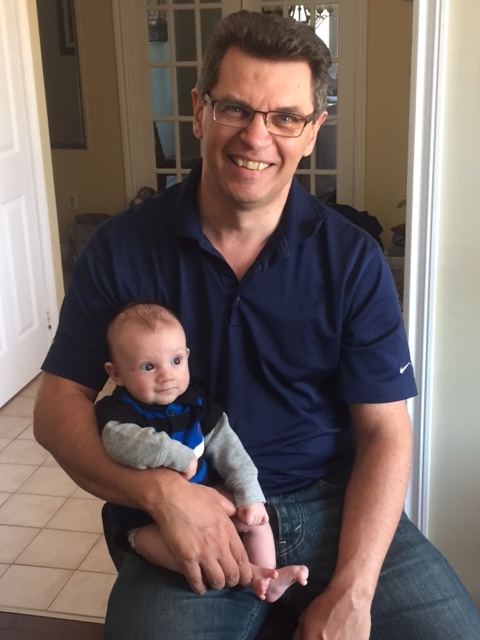
On 3.16.2017, our son, became a father, making me a grandfather. Well how did that happen? Without making this a PG rated blog, allow me to explain: It started with a conversation. Cathy (now my wife) and I, had our first date in May 1985. We talked together a lot on that evening. We shared our dreams and visions for the future and discovered that we had so much in common (at least until we got married, but that’s a story for another day). Well the words we shared eventually led to our marriage, where we publicly spoke our commitment to one another (before God and this company, I believe is how it traditionally goes). I still recall memorizing our vows in which we promised to “speak words of grace that would build one another up.” Maybe, I remember that so well, because it was one of the most difficult parts to keep.

IMG_2027

Well 25 months after those vows were spoken (to the very day), our son, David was born. He made similar vows himself when he was married (20 years later).

Here is the point: change comes to our lives because words are spoken.

Marriages happen because words are spoken (vows), divorces happen for the same reason. Politicians are elected in many cases because of promises made (words spoken) and not re-elected in other cases because promises were broken.

We are constantly becoming or changing because of the influence that comes into our lives through media (words that are spoken to us). You may not even realize it, but you are actually very much an influencer, and are helping others become who they are. The words you speak are more important than you realize because they are agents of change and with them you impact those around you.

Interestingly, the Bible says “the word became flesh” referencing, of course, the coming of Christ to live on this earth as a man. The Bible is the only book that has the claim of being alive and still desires to become something, or bring about change in us.

My son and daughter-in-law have discovered that when new life entered their lives, change was immediate. In my next few blogs I will walk through the impact  words have within us and how they impact what we become.

So let me ask you this: How have words spoken to you impacted your life? What change are you bringing in others through the words that you speak?


Did You Chase The Ace?

Did You Chase The Ace?

One of the headlines in the news, especially in Newfoundland, but also nationally is:

Newfoundland couple wins $2.6-million Chase the Ace jackpot in final night of lottery

Chase

According to one blogger, Chase the Ace is a phenomenon in Newfoundland and Labrador. In 2014, just two lottery licenses for the game were issued; for 2017 alone, at least 283 have been granted to churches and community groups across the province in order to raise funds. I find it interesting that he also referred to this phenomenon as “a new religion.”

When I read this statement, I wasn’t quite sure how I felt, maybe a little uncomfortable. I decided to seek a definition and without even leaving my laptop, google told me: religion is a pursuit or interest to which someone ascribes supreme importance,

It seems the word “religion” accurately represents the Chase the Ace phenomena because hundreds of people would line up for hours with funds to purchase tickets. What was the motivation? While it was ultimately about raising money for the church, the primary motivator of the participants was the desire for profit, not about giving (even though the cause was a good one). Right below that definition of religion, it states that “consumerism is the new religion.” While this lottery is a successful means of fundraising, what created the enthusiasm among the people was the desire for wealth, which is driven by consumerism.

Here is the structure of the Chase the Ace lottery: the consolation prize was 20% of the day’s ticket sales, while 30% accumulated into the jackpot that was awarded if a ticket-winner drew the Ace of Spades from a diminishing deck of cards. The other 50% went to the parish (charity). Interestingly, there is little focus in the media on the amount raised for the church except that: Organizers say they will know how much money the lottery raised in a couple of days.  There is no doubt this fund-raising was a huge success and much more was raised this way than by passing an offering plate around on Sunday.

Here is my point: most people weren’t focused at all on giving, yet 50% was being given away. They were “tricked,” for lack of a better term, into giving half of their money away. What was everyone focusing on? Maybe partially on giving. The primary focus though, was on receiving, or winning the prize. There was a building of excitement each week as the Ace was not drawn and the jackpot (30% of ticket sales) continued to grow.  Even the 20% (consolation prize) created great anticipation.

Interestingly, Newfoundland and Labrador’s provincial motto is an admonishment from Jesus Christ: “Seek ye first the Kingdom of God.” The promise is that when we do this, tomorrow will take care of itself; but it seems like we no longer place any confidence in these words. One of the ways to put God’s kingdom first is to give, and trust Him for our provision. Instead, giving is disguised as a lottery and we trust in our own abilities for tomorrow’s provision, even if it comes from a lottery.

Churchill

The fact is most of us have simply lost the focus and excitement of giving, because we would much rather receive. Obviously, the vast majority of those who bought tickets did not win anything, so their only consolation is that they gave 50%, but most of these probably feel they lost the entire value of their ticket. I think the truth is that most had little thought for the amount they were actually giving to charity. Isn’t it still true though, that it is more blessed to give than to receive?”


42 – It’s Not Just About You!

200px-JrobinsonOn a recent flight back to Newfoundland, I  watched a movie called “42” which is the story of Jackie Robinson (#42), best known for becoming the first black major-league baseball player of the modern era.  Manager, Branch Rickey intentionally searched for a black player and the story unfolds. As I watched, I could sense the excitement that Robinson must have felt, being the first black chosen to be in the major leagues.
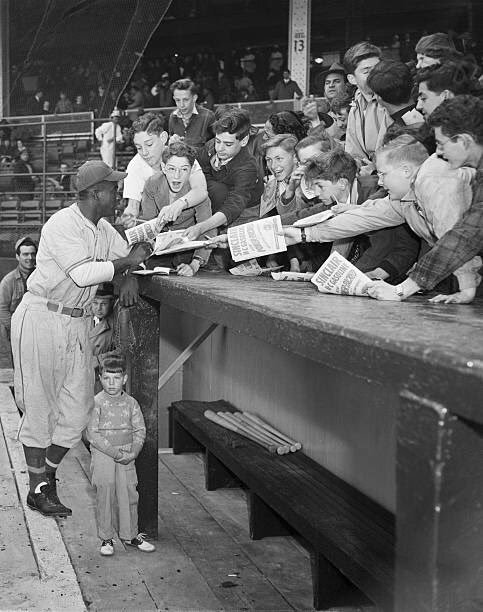
He was a talented athlete but is that the only reason Rickey selected him? I became very intrigued as the movie progressed because it really demonstrated that the choice was also because of his ability to turn the other cheek.  Sure, it was about winning, so the team needed talented players, but actually,  it was more about bringing change in the sport and influencing a nation.
The Brooklyn Dodgers were scheduled to play in Philadelphia, (ironically the city of brotherly love).  However, the home team refused to play simply because Jackie Robinson was on the team. The two managers exchanged words:

“You cannot bring that boy down here with the rest of your team.”

Rickey responded, “Why is that?”

“We are just not ready for that sort of thing in Philadelphia. I’d like to know what it is you are trying to prove!”

Rickey responded with an odd question, “You think God likes baseball, Herb?”

“What the hell is that supposed to mean?”

“It means someday you’re gonna meet God, and when He inquires as to why you didn’t take the field against Robinson in Philadelphia and you answer ‘It’s because he was a negro,’ it may not be a sufficient reply.”

I found it interesting that Rickey brought God into the argument to show that the way Robinson was being treated was very displeasing to God. The reality is Jackie Robinson was not only chosen because of his athletic ability but the colour of his skin and his willingness to resist the attacks that Rickey knew would come.

JR white boyWhen Robinson asked why he did it, Rickey explained that he loved this game of baseball and that he had given his whole life to the game. Then he referenced the past unfairness he saw when he was a player and their Negro catcher, Charlie Thomas, “a coloured boy was laid low, broken, because of the colour of his skin and I didn’t do enough to help. I ignored it.” He continued, “There was something unfair at the heart of the game I loved, but the time came I could no longer do that.” As a manager Rickey chose Robinson to bring change to the game. He told Jackie how he watched some kids playing and said, “I saw a little white boy up at bat … you know what he was doing? … pretending he was like you … little white boy pretending he is a black man. You made me love baseball again. Thank you!”


Branch Rickey was motivated to bring Jackie Robinson into the major leagues, not just to win the pennant but to influence culture.  It is said of Jackie Robinson that he helped change attitudes and led the team in more ways than one! In fact, in the baseball world, April 15 is “Jackie Robinson Day” when players wear the #42 on their jerseys in honour of this Hall of Fame hero!

Back to our vacation … Typically when we travel, we try to have a reason beyond just rest and relaxation. On this trip, we were able to visit with some old friends that we hadn’t seen for many years. I believe our visit helped to lift spirits more than we actually realize. Our trip back “home” was very fulfilling, mainly because it wasn’t just about us having a good time; we were able to have a positive influence on others. Remember, in all you do, life is not meant to be only about you!

Be sure to listen to this song at the end of the movie!! Take a few minutes to watch and listen.


Is God Really In Control?

This is truly an important question to address. Recently, I read the following statement in a devotional: God is sovereign, meaning God is in complete control of everything. I think most believers in God would tend to agree with this statement, especially since we have heard preachers make similar declarations. However, I believe there is a big difference in God being “sovereign” and in God being “in control.”

There is actually a significant distinction between these two terms “sovereign” and “control” that needs clarification. When you consider the attributes of God “control” is not one of them, but “sovereignty” definitely is.  Here is an example to help clarify: Canada is commonwealth nation and as such recognizes the Queen as sovereign, yet she is not really part of the government that rules (controls) the country. Interestingly, to call an election though, government leaders have to first meet the the representative of the Sovereign or the Lieutenant Governor. In essence, while the Queen is sovereign, she’s not in a position of controlling policy or the everyday affairs of governing.

commanding officer

Here is another example: Consider the command of a naval ship; the command is vested in the Commanding Officer (CO) for the direction and control of the ship. The CO retains this authority at all times. Control is the authority that is vested in the CO to give orders pertaining to the operations of the ship. Obviously, because of human limitations, the CO may delegate charge and control of some particular aspects of the ships operations to one or more officers (such as Executive Officer or Officer On Watch), but the CO always retains command. Now this is certainly a human example, but it can help bring an understanding to this issue of control. The CO is always in command (sovereign), but at times delegates control of the ship, which in no way reduces his authority.  In the same manner God is always sovereign, but delegating control (to man) does not reduce his authority over the earth.

Think about creation when man was made in God’s image: man was given charge, dominion, authority to rule the earth. There is no doubt that God (the Commanding Officer), gave the earth to mankind (see Gen. 1:26 & Psalm 115:16b). Now let’s be clear, “the earth is the Lord’s” (Psalm 24:1) and He remains sovereign over the earth despite man having received dominion over the earth. Control is different than sovereignty.

In my last blog, I quoted 1 John 5:19 in reference to the story of Dunkirk because it can be most difficult to believe that God is in control while some people were rescued from the shores while others who were just as loved died on the beach. The verse says this: “we know that we are children of God and that the world around us is under the control of the evil one.” This is a very important verse and one that many struggle to understand: the world we live in, is now actually controlled by the the evil one. Yet God is sovereign and in still in command.

Interestingly, whenever a CO delegates control, the CO also indicates: the aspects delegated, the duration for which control is delegated, and the limits which apply to the delegation. Now, consider the story of Job, when the ‘evil one’ comes to God about Job, God (CO) grants control but speaks to the aspects, the duration and applies limits. How many times have we held God responsible for things that happened, when in fact, it was an act of the evil one, or even consequences of our own actions? We know the end of Job’s story, God remained sovereign (in command), but delegated control for a limited time. In fact, the LORD gave him twice as much as before!

The whole issue of sovereignty vs. control can be beyond our human comprehending. Hopefully, this explanation is helps us understand that when we are faced with difficult circumstances, and things seem completely out of control, we can still trust God Who is sovereign.

A Hidden Truth Re: Dunkirk

My wife and I recently watched the new movie released about the evacuation at Dunkirk during World War II. Even after watching the movie, I did not realize that “Dunkirk is not simply a gripping story; it is also a thought-provoking one because even today the word ‘miracle’ hangs over it.” I was amazed to read this “behind the scenes” account.

I love watching movies that tell a story from history and expose more of the details behind the event. Here is the background that J. John Canon revealed in his blog: “On 10th of May, 1940, Hitler unleashed a military onslaught on France and Belgium. Within days, the British Army – outmanoeuvred and unprepared – along with soldiers of other Allied nations, found themselves (some 400,000) with their backs to the sea and hemmed in by enemies.”

Here is what I did not realize: On 23rd May, King George VI requested that the following Sunday should be observed as a National Day of Prayer. On that Sunday of prayer, the call was made to rescue these stranded men, with about 800 private fishing boats and vessels responding.

Here is the kicker: In a decision that infuriated his generals and still baffles historians, Hitler ordered his army to halt. It is no wonder that Churchill referred to this as the miracle of Dunkirk. How impactful was it that a nation was called to pray? The calming of the winds (so the vessels could rescue those stranded), the ceasing of the attack for this time of calm, sounds like a miracle we would read about in the Bible or hear a pastor reference in a sermon.

Dunkirk

I find the tag line of the movie “the event that shaped our world” to be an interesting one. Many in our society discount God’s involvement or even His existence, but when I see the hidden details of this story, I cannot help but think that He is likely more involved than we realize. Some may argue about war itself and also about those who lost their lives asking, “Where was God for those people?” While I can’t claim to have all the answers, I do know that we are children of God and that the world around us is under the control of the evil one. This verse (1 John 5:19) has answered many of my questions and helped me realize that the events we often call “acts of god” are in truth, acts of the god of this world, or the evil one, not the acts of a loving God.

However, from time to time we do see a miracle like Dunkirk and it can help restore our confidence and trust in a God who can intervene in the events of this world. When I watched the movie, I saw a rescue, but after learning the hidden details of the story, I see a miracle!


Profit From Your Giving Account?

In my last blog post I asked the question: What are you getting in exchange for money? How we spend our money is usually determined by the value we receive in exchange for our money. Let’s face it, if we do not feel we are getting good value, then we decide not to spend money in this way.

When it comes to giving money away, we need someone to help us gain the right perspective.  As an example, when we make a donation to charity, do we consider it giving money away or investing it? In Phil 4:10-20 the Apostle Paul expressed his appreciation to the Philippians for their financial support by telling them they were the only church who gave during this time.  Paul was not simply thanking them, but helping them gain an important perspective about the benefits of giving. Here are a few reasons we usually give:

  1. There is an expressed need
  2. We are moved (with compassion) to give
  3. Maybe we have been taught to give 10% of our income
  4. Our income is higher, so we could use the tax break

The new perspective Paul brings contains another benefit of giving that we often overlook: “the profit that is increasing to your account.” Paul actually downplayed the benefit of the gift to himself (or his ministry), in order to emphasize what these people were receiving in exchange for the gifts (money) they gave.  It is difficult for us to even comprehend an eternal account, or that we can make deposits into it with our giving, but that is actually what Paul was excited about. He was really saying, “When you give what is temporal, you multiply what is eternal.” The true value received was an increase in their kingdom account, which incidentally, yields dividends in this life as well.

Accountability_ProfitIn the next verse, Paul notes that he received the gift, but also that it was “well pleasing to God.” So the gift that was given to Paul’s ministry was actually credited to the kingdom account of these people; treasure was being “stored up” in their account in heaven. It was a gift on earth, but an investment in a heavenly account.

Typically, having an account is essential to receive services at any financial institution today. It is interesting to note that the verse that most Christians quote about God supplying our needs, follows this reference to “the profit that is increasing to your account.” It seems the promise of supply (from heaven) is connected with having an account (by giving on earth). The promise of God meeting our needs “according to His riches” is connected to the account that Paul referenced, namely, the one that is accumulating there through giving here on earth. Our giving actually “opens” an eternal account.  However, if you think about what Phil. 4:19 says, the supply we receive for our needs is not actually from our deposits (or gifts given to charitable work) but “according to His riches.” This is a little much to comphrend … we make deposits into our kingdom account by giving and the promise of our needs being met is not even withdrawal from that account, but comes “out of His wealth.” So when we give, we can truly have confidence in two important things:

  1. Our kingdom account is receiving deposits that will profit (eternal rewards)
  2. Our needs are promised to be met while we are on earth

I think that is a great return on investment! 

Are You Getting the Best Return?

I can remember learning about the bartering system where a fisherman might exchange some fish for vegetables, where both could receive what they needed from the other. This is, of course, the beginnings of money being used as a means of exchange for goods. What are you getting in exchange for money? The answer will be different for all of us since we all have different priorities and values.

Suppose you were given $10,000 to do with as you please.  How would you use these funds?  What drives your decision?  It is important to realize that regardless of your choice, it is not wrong, it simply shows your priority.

The reasons may vary depending on your present circumstance in life. If your choice was to spend it, it could mean that you feel that pleasure is important at this time in your life. Maybe you have just had a major illness and a family vacation would be meaningful. Or maybe you would choose to pay down debt. It may be that what you owe is a burden and the relief from this stress would be more important than just spending it. How do you measure the return?  In some cases, it can seem simple: if the rate of interest is 9% on your loan, then paying it off would mean a 9% return. What can be more difficult to calculate is the stress-relief gained by this reduction in debt.

When you think about getting the best return, maybe investing it is the best idea. If you save in Retirement Savings Plan, it could mean a tax refund, determined by your tax bracket, plus whatever it earns. In addition to these things, it can also offer a sense of security that you are preparing for your future.

There is another option … Did you think about giving it away? I know what you are likely thinking … “There is no return if I give it away, so why would I consider that as an option?” Consider this: When the people sent gifts to the Apostle Paul, he declared that his interest was not actually in the gift that he had received, but rather to “seek the profit that is increasing to your account.” The “profit” referenced here was because the people gave and the account was not what you might think. It was an eternal account, directly the result of the gift generously given to him here on earth. When you give what is temporal, you multiply what is eternal. So not only will you receive a tax savings for making a donation to a registered charity, but you receive a rate of return that is literally out of this world.

RORLet’s face it, we all want to make the most of our money and make good financial decisions. The return on investment will obviously vary depending on your choice and priority you set. Interestingly, the return on investment may have less to do with an interest rate and more to do with the choices we make.
So take a minute and tell me what you would do with the $10,000. Would you spend it, pay down debt, invest it or give it away? Why did you make that choice?

What’s The Purpose of Money?

Here is a question I recently googled: “What is money?”  I found a one-sentence answer on Investopedia that intrigued me: “Everyone uses money. We all want it, work for it and think about it. While the creation and growth of money seems somewhat intangible, money is the way we get the things we need and desire.”

We all want it. What is our motivation and drive for money?  Why do we always seem to desire more? I have learned that there are only 5 major uses for money. We can:

  1. Spend it (lifestyle determines our spending decisions)
  2. Pay debt (often an extension of lifestyle)
  3. Pay taxes (normally deducted from our pay and also added to items purchased)
  4. Save it (for short and long term goals)
  5. Give it (often not our top priority)

The reasons we want money then, can be summed up in these five uses alone.

We work for it. These reasons become our motivation to work for it. Think about the five uses and you will notice that the majority is about you or those you love. Your spending, debt and saving are typically focused on self. Even if you think about the different types of tax we pay, much of it is also focused on ourselves. Consider the property tax on our homes, tax on the cars we purchase, or the tax on clothing and food. The more we spend (usually on ourselves), the more we pay in tax. Income tax does form part of our social capital (not so much about us, but others), provided to people through government programs. Have you ever complained about paying so much in tax? We may grumble, but in fact, we should be thankful about paying tax since it means we have had a good income. Sadly, the only use of money geared toward others (giving), is oftentimes, least on our priority list .

We all think about it. Pause for a minute and consider WHY you want money. The reasons may be different in your 20’s, than in your 40’s and may change again in your 60’s. We all have to set our priorities regardless of age, and determine how we will use money.

Setting the boundaries around your financial decisions in each of these areas impacts the other areas. When you consider the amounts you save and even where you save them (like in an RRSP), can reduce the amount of tax owing annually. Think about the giving to registered charities; the amount given reduces the amount of your annual tax bill. Determining to spend less will also reduce the amount going to tax freeing up funds that can go elsewhere. Discipline in saving, spending and giving then will reduce the amount required to go to tax.

What is the purpose of money? Consider this: Money is a tool to help you walk out your calling. This may help to explain why some people who could retire from their job or business, actually choose to continue their work.  In many cases, it is not to save more, because they already have accumulated enough. It is not a desire to spend more because they are happy with their lifestyle and have eliminated debt. Surely no one is working because they enjoy paying more taxes. Can the motivation to continue work simply be to give more?

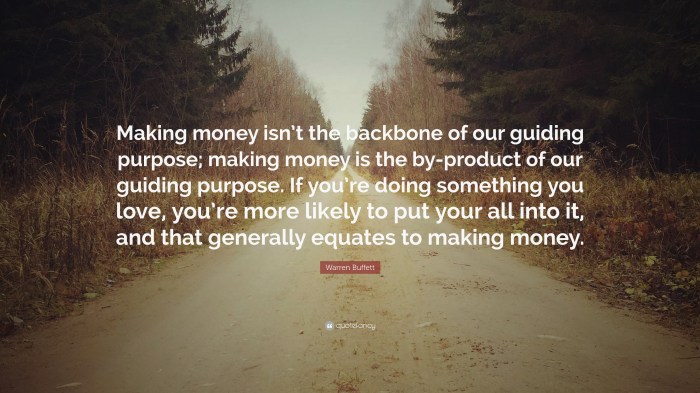
119293-Warren-Buffett-Quote-Making-money-isn-t-the-backbone-of-ourWarren Buffett brings clarity to the purpose of  money by stating, “making money is a by-product of our guiding purpose.” When you think about your calling and purpose and see money as a tool to complete it, maybe “the making of money” takes on a whole new meaning.